
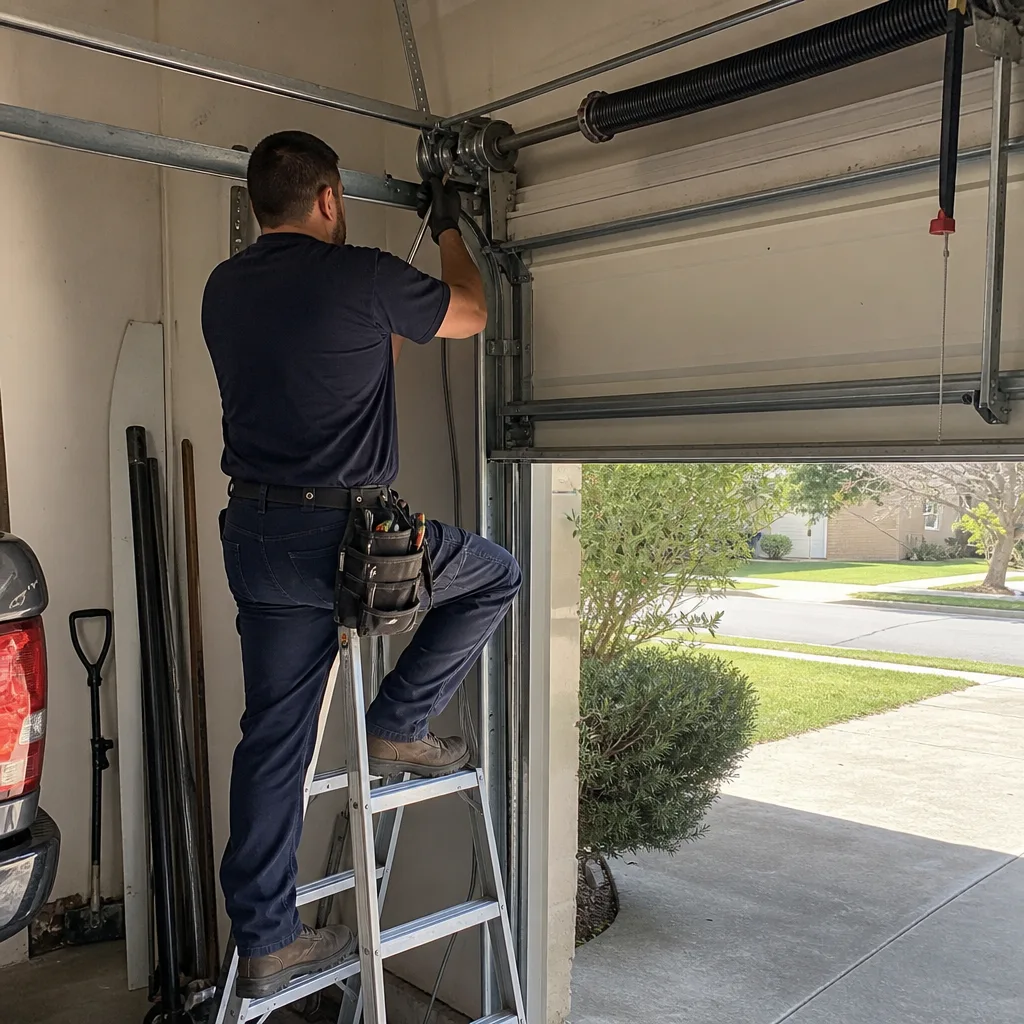
Last updated September 11, 2026
Full 25-point door and opener safety check with every visit - springs, cables, rollers, tracks, and your LiftMaster or Chamberlain opener included
You get a price before we start. It does not change when the truck arrives.
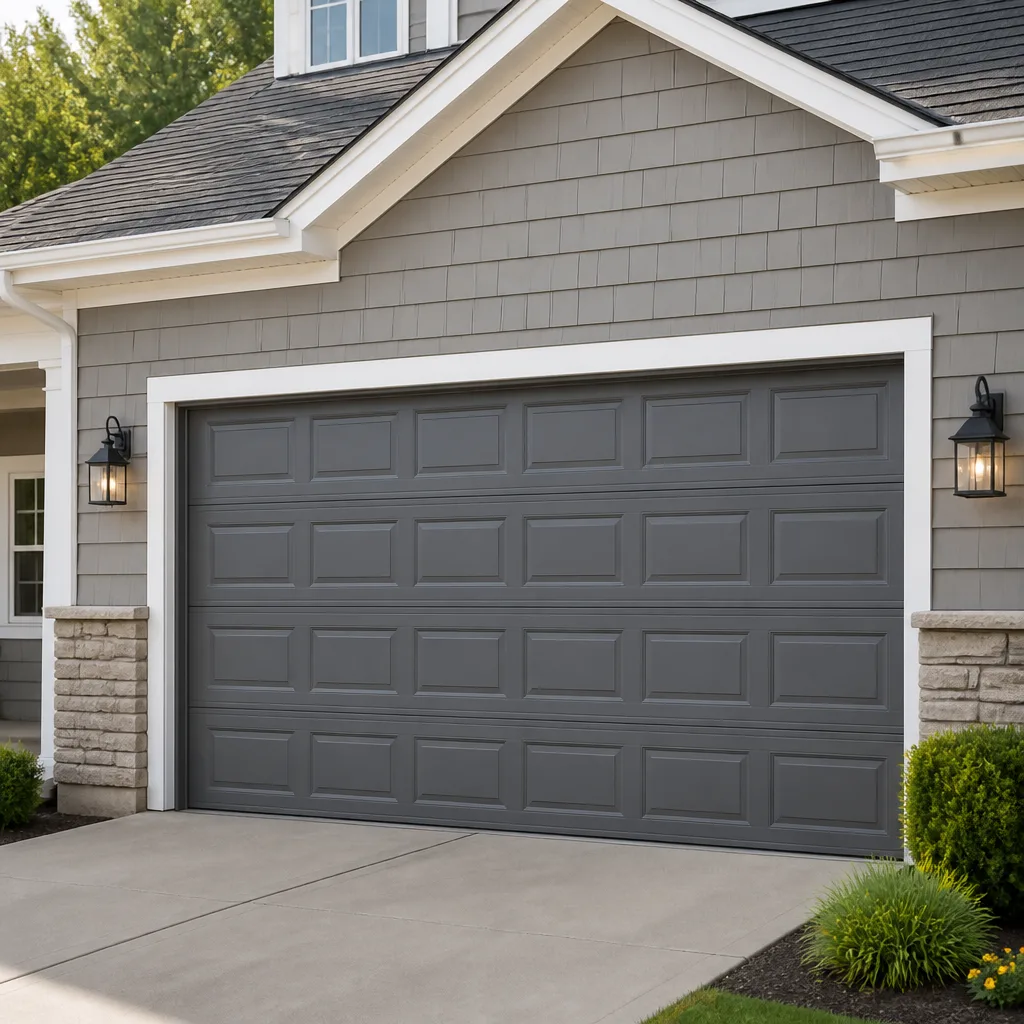
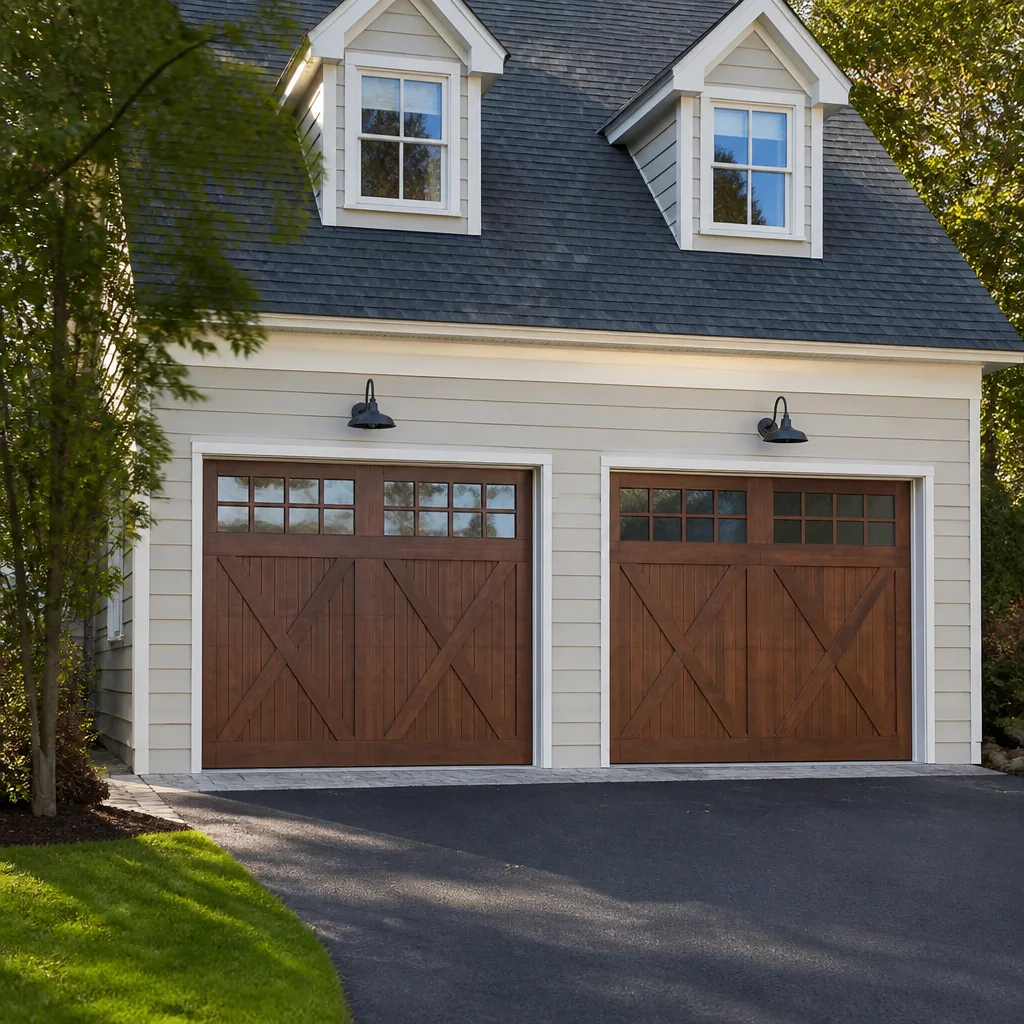
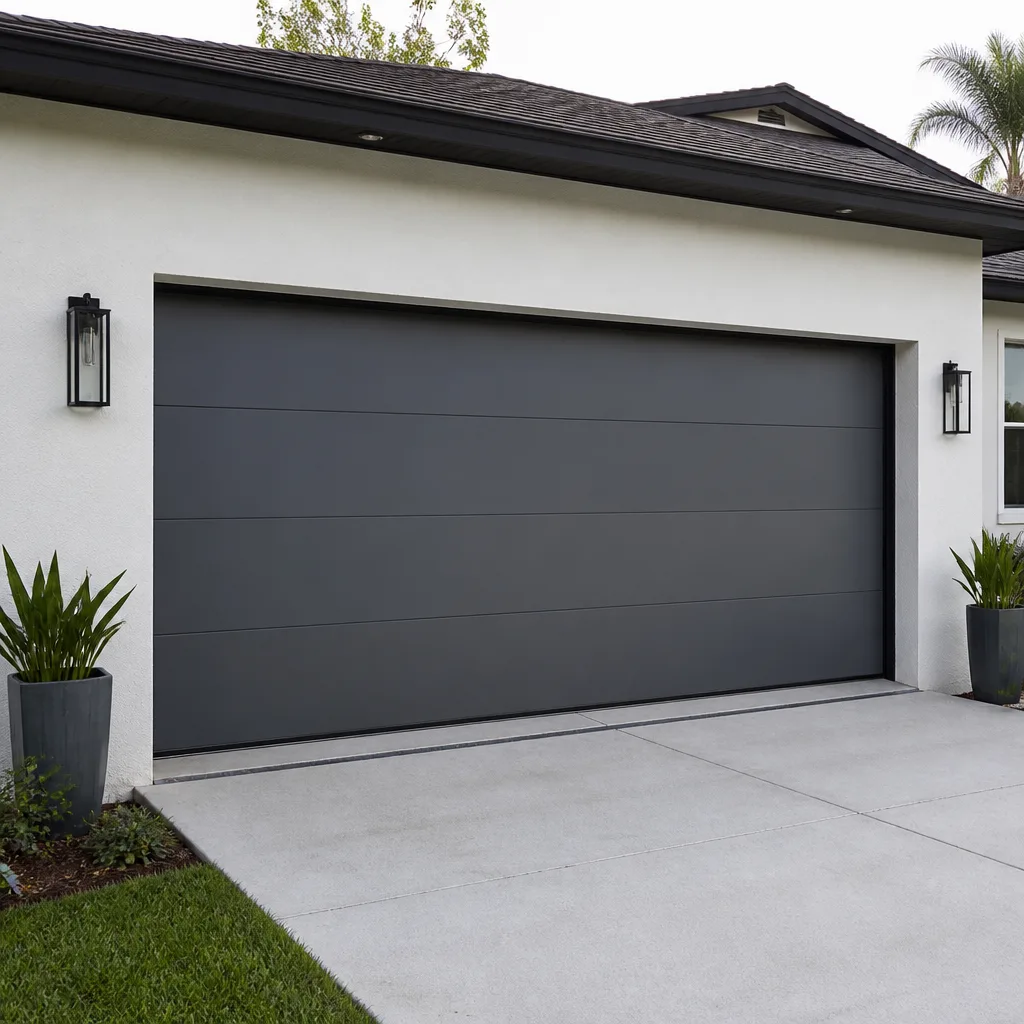
 Before
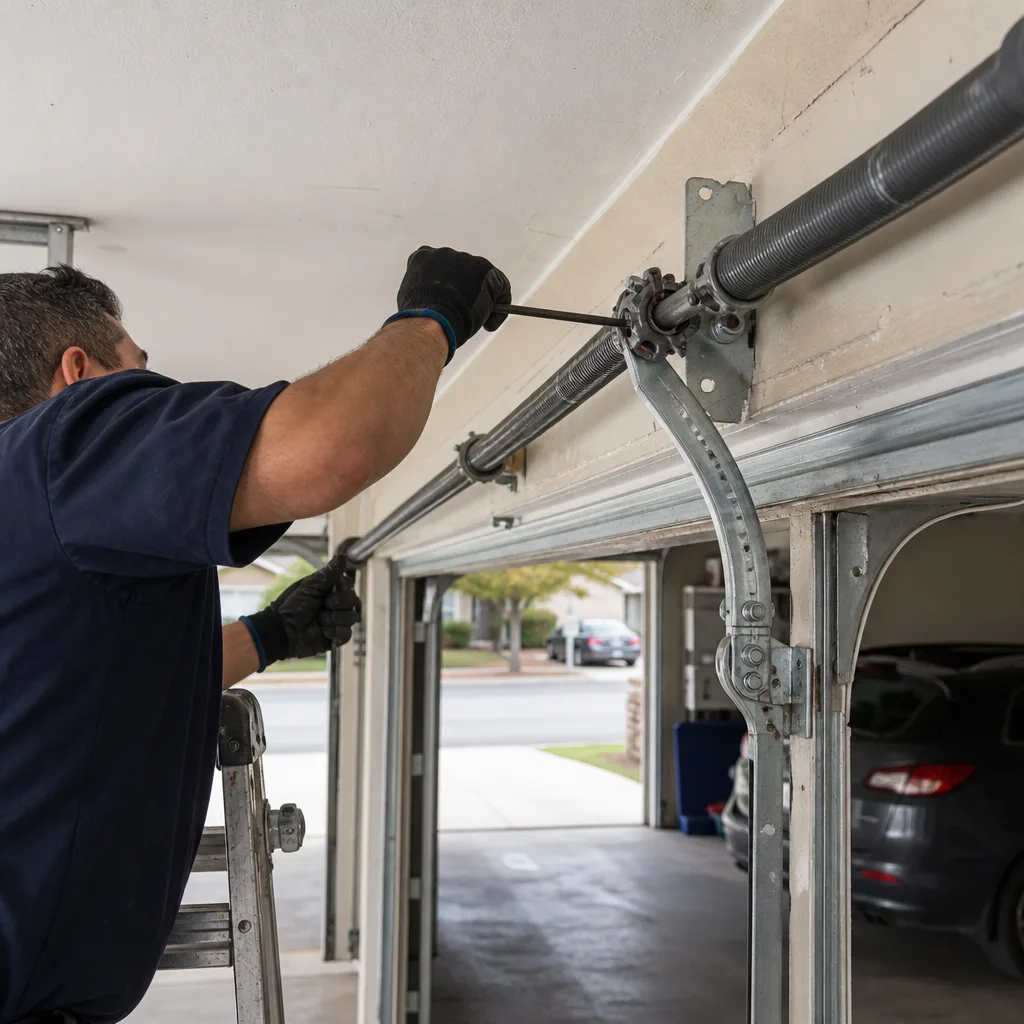 After
After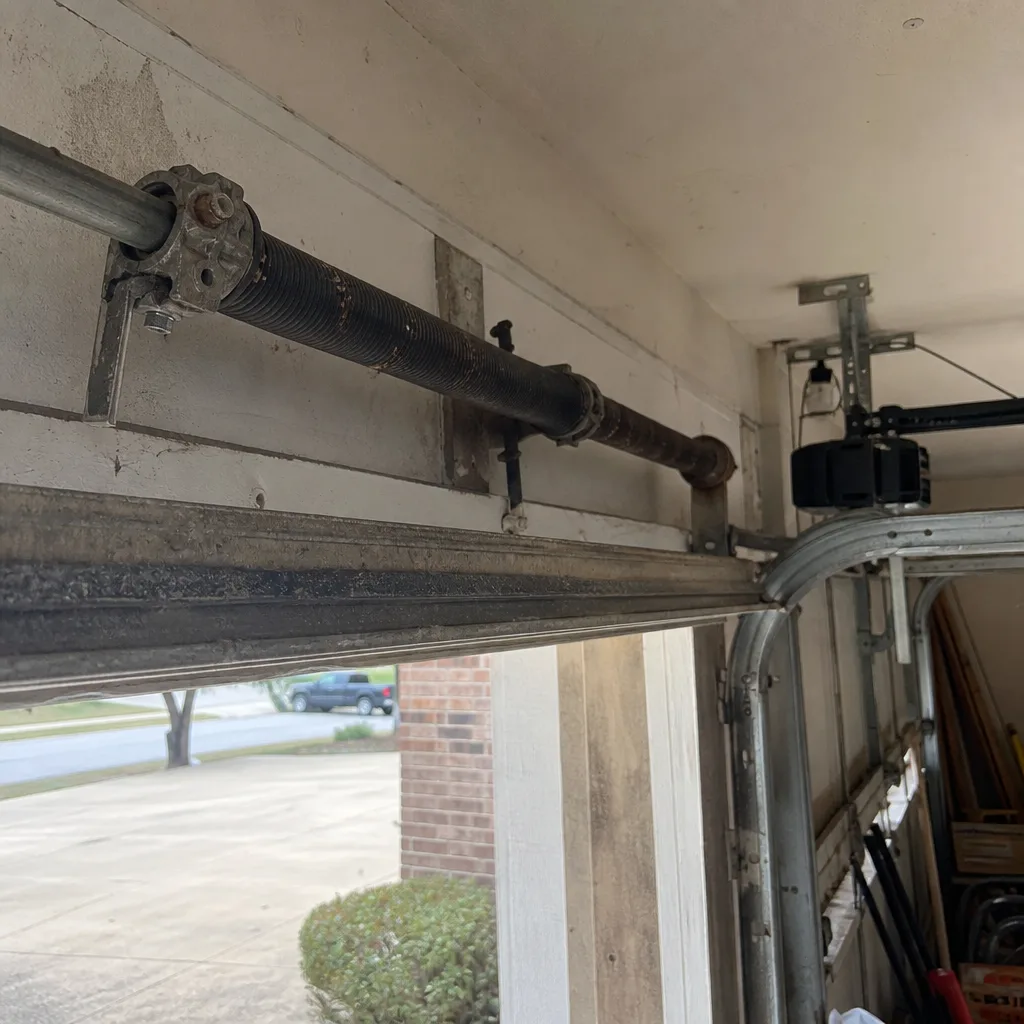 Before
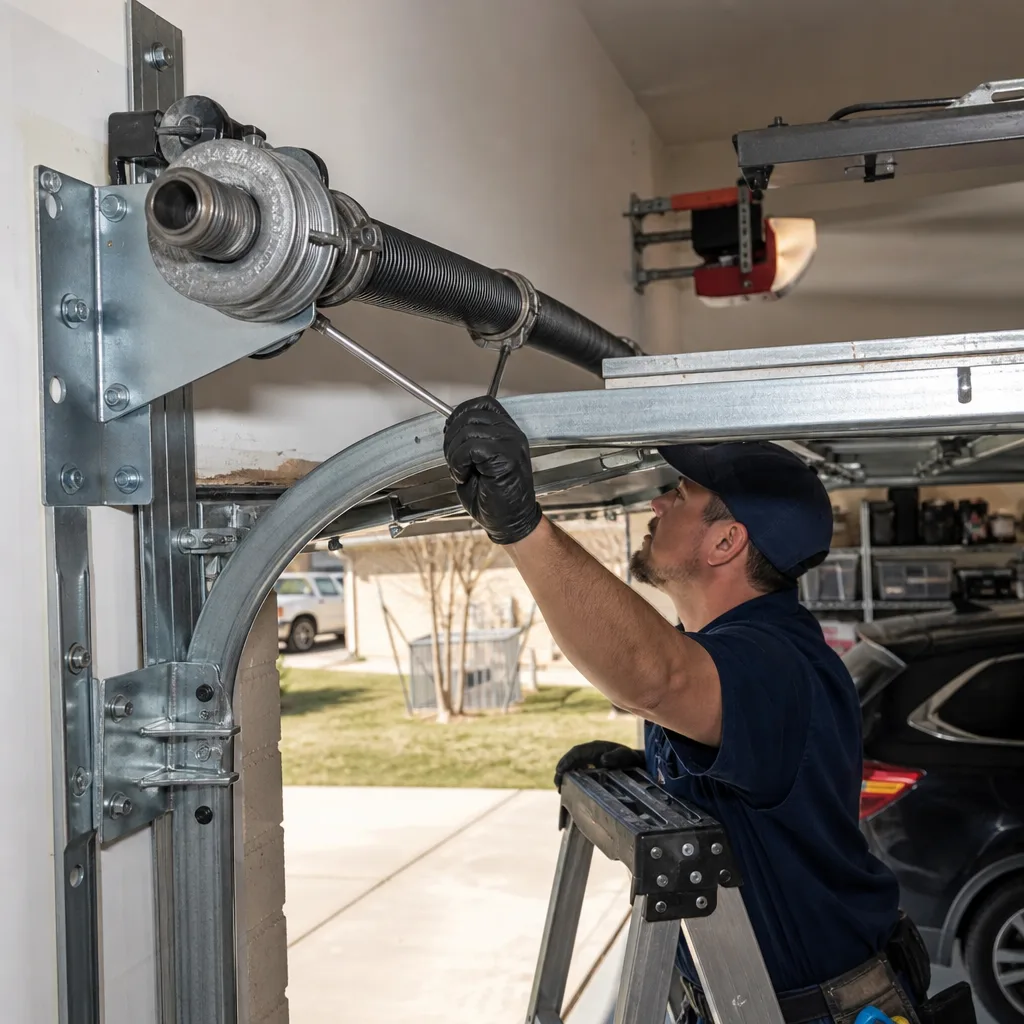 After
After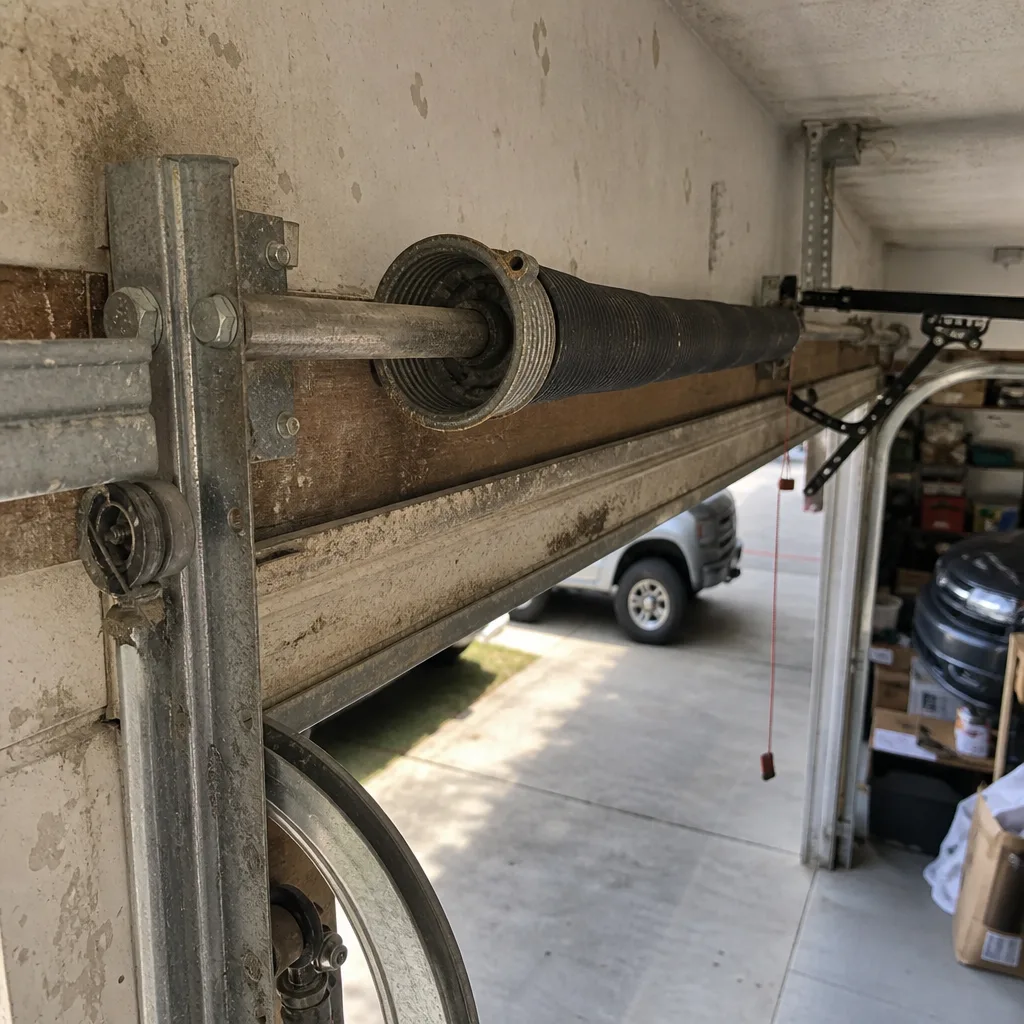 Before
 After
AfterSeasonal Garage Door Care for Schertz: Year-Round Homeowner’s Guide
Here’s the thing about garage door failures around Schertz that most homeowners don’t figure out until the truck is already in the driveway: your spring didn’t break because it got cold. It broke in December because it spent May through September baking in 100-degree heat, cycling twice a day, and nobody looked at it once. Texas doesn’t punish garage doors the way Minnesota does. The damage here is slow, cumulative, and mostly invisible until a Wednesday morning when the door won’t open and your truck is sealed inside. This guide covers what to check, when to check it, and which repairs are worth doing before the door does them for you. For a deeper dive, see our The Complete Guide to Garage Door in Schertz.
Quick Answer
Seasonal garage door care in Schertz means four focused checkups per year: a pre-summer inspection in April, storm-season reverse testing in May, a post-summer fatigue assessment in September, and a lubrication and tension check in November before the first real cold snap. Ten minutes of inspection during these windows prevents the two dominant failure patterns in this climate: heat-fatigued torsion springs and opener motors that burned out fighting a door that was never rebalanced after summer expansion. A Garage Door Repair in Schertz visit typically runs $89 to $180 for a tune-up and catches these problems before they strand your vehicle.
Table of Contents
- Why Schertz Destroys Garage Doors Differently Than Anywhere Else
- Pre-Summer Checklist (April): Getting Ready Before the Heat Starts
- Storm-Season Prep (May-June): The Auto-Reverse Tests That Save Doors
- Post-Summer Assessment (September): Reading the Damage After the Heat Breaks
- Cold-Snap Prep (November): Preventing the December Broken-Spring Calls
- Pollen, Cedar Elm Leaves, and the Debris Problem Nobody Mentions
- The Schertz Lubrication Schedule: What to Use and What to Skip
- Common Mistakes to Avoid
- When to Call a Professional
- Frequently Asked Questions
- The Bottom Line
Why Schertz Destroys Garage Doors Differently Than Anywhere Else
We’ve been fixing doors in this county since 2004, and the failure pattern in Schertz is predictable enough to set a watch by. It’s not four equal seasons. It’s two seasons that actively damage your door and two transition windows where a few hours of smart maintenance can prevent the problems the other two seasons are quietly building.
Summer in Schertz runs reliably above 95 degrees from late May into early October, with stretches past 100. That heat does three specific things to a garage door system. First, the metal tracks expand. A steel track can add a few thousandths of an inch of width in sustained heat, and if the door was adjusted tight in February, that expansion binds the rollers. Second, the torsion springs lose a measurable fraction of their strength with every heat cycle, and a spring that spent the summer at 110 degrees in a closed garage has aged faster than one in a shaded carport. Third, the opener motor works harder: a hot motor pulling a heat-bound door on a 100-degree afternoon is running at the edge of its thermal capacity, and that’s when circuit boards fail and plastic gears strip.
Spring storm season around Schertz has been throwing wind gusts past 50 miles per hour through neighborhoods like Fairhaven and Carolina Crossing with enough regularity that we schedule extra crew time from April through June. A wind-pushed door pushes back on the opener carriage, and if the auto-reverse isn’t set right, that’s how you get a bent rail and a motor that burns out trying to close against wind load. Storm season is when the safety systems have to be right.
Then there are the transition months: April and September. These are the windows where the homeowner is home, the weather is bearable, and an hour of attention prevents almost every emergency call we run the other ten months of the year. The rest of this guide walks through those windows in order.
If you’re considering replacing rather than maintaining, check out our Garage Door Installation in Schertz page for what a properly balanced new door should feel like.
Pre-Summer Checklist (April): Getting Ready Before the Heat Starts
The April checkup is the most important of the year, because everything you fix now prevents damage that compounds from May through September. Here’s the order we use when we do a tune-up, and it’s the same order you can follow yourself in about thirty minutes. If you’re weighing whether to DIY, our DIY vs Professional Garage Door: The Schertz Homeowner’s Decision Guide can help you decide.
- Look at the gap under the door. Walk outside, close the door, and kneel down. You should see even contact between the bottom seal and the concrete on both sides. If light comes through on one side and not the other, the door is out of level, which means the springs are carrying uneven load. That’s a pre-existing fatigue problem that heat will accelerate.
- Watch the door move. Run the door up and down once with the opener. It should move at a steady speed with no hesitation and no lurching. If it slows on the way up, stops and reverses, or shudders partway, the springs are losing tension. A door is 200 pounds riding on two springs. Respect it.
- Check the rollers. Nylon rollers should be clean and round with no flat spots. Steel rollers should have no visible rust or wobble. A flat-spotted roller will click every time it passes the same point, and in summer heat that click turns into a bind that drags the whole door sideways.
- Test the auto-reverse. With the door open, place a 2×4 flat on the concrete under the center of the opening. Close the door. It should hit the board and reverse within one second. If it doesn’t reverse or reverses slowly, that’s a safety failure and a storm-season liability. Details on this in the next section.
- Run your hand along the tracks. Tracks should be smooth, tight at the brackets, and free of rust bloom or pitting. In April, you’re looking for winter moisture damage before the heat locks it in. A rusted track surface will grind rollers down all summer.
- Listen to the opener. A healthy opener makes a low, even hum. A grinding whine means the gear is wearing. A clattering sound means the chain or belt has slack. Both fixable in April, expensive by July.
If anything in this list fails the test, the repair costs less in April than it will in June. Heat never improves a marginal part. It just makes the failure happen faster and at a worse time.
Storm-Season Prep (May-June): The Auto-Reverse Tests That Save Doors
From mid-May through June, Schertz gets fronts that roll in fast, and when a 40-mile-per-hour wind gust hits a closed garage door, that force transfers through the door and into the opener carriage. If the auto-reverse is friction-sensitive, a wind-pushed door trips the safety and reverses. If it’s not, the opener keeps pushing against wind load, and something has to give: the rail bends, the gear strips, or the top bracket tears off the door.
Set your auto-reverse correctly in May and test it once a month through the storm season. Here’s the full procedure:
- Clear the doorway. Remove cars, bikes, anything. You’re going to be intentionally blocking the door’s path.
- Test the contact reverse. Place a solid object of about 2×4 height flat on the ground, centered under the door. Close the door with the opener. The door should reverse within one to two seconds of touching the object. If it keeps trying to close, stop the test immediately and call someone. That door will break a bone or crush a pet.
- Test the photo-eye reverse. While the door is closing, wave your hand through the beam between the two safety sensors. The door should stop and reverse immediately. If the door continues closing, the sensors are misaligned or dead and the system is running with zero safety.
- Test the force setting. Close the door and stand where you can watch the bottom edge. While it’s descending, grab the bottom handle or rail and resist it. You shouldn’t have to fight hard: the door should give up and reverse with modest resistance. If it strains against you, the force limit is too high. That’s the setting that bends rails in a wind event.
The auto-reverse is not a convenience feature. It’s the difference between a door that stops and a door that closes a person inside the opening. In storm season, it’s also the difference between a functioning opener and a snapped rail. If any of these tests fail, a Garage Door Opener in Schertz adjustment is a cheap fix compared to what the wind does to an unsafely tuned door.
One more storm-season note: secure loose panels before the fronts arrive. Walk the door panel by panel and press on each section. There shouldn’t be flex or movement at the seams. A Clopay or Amarr door that’s developed a loose rivet or a cracked hinge will rattle and flex in wind, and repeated flexing cracks the panel itself. If a panel is already cracked, replace the hinge, not just the panel, or the crack will come back. We work on all of these brands regularly, and Wayne Dalton doors have a particular hinge pattern that needs the exact replacement part, not a generic one.
Post-Summer Assessment (September): Reading the Damage After the Heat Breaks
September is the month we see patterns that tell the story of the summer. By then, the heat has done what it’s going to do, and the door has cycled roughly 300 to 400 times since April. That’s enough cycles for problems to show up as symptoms you can read if you know what you’re looking for.
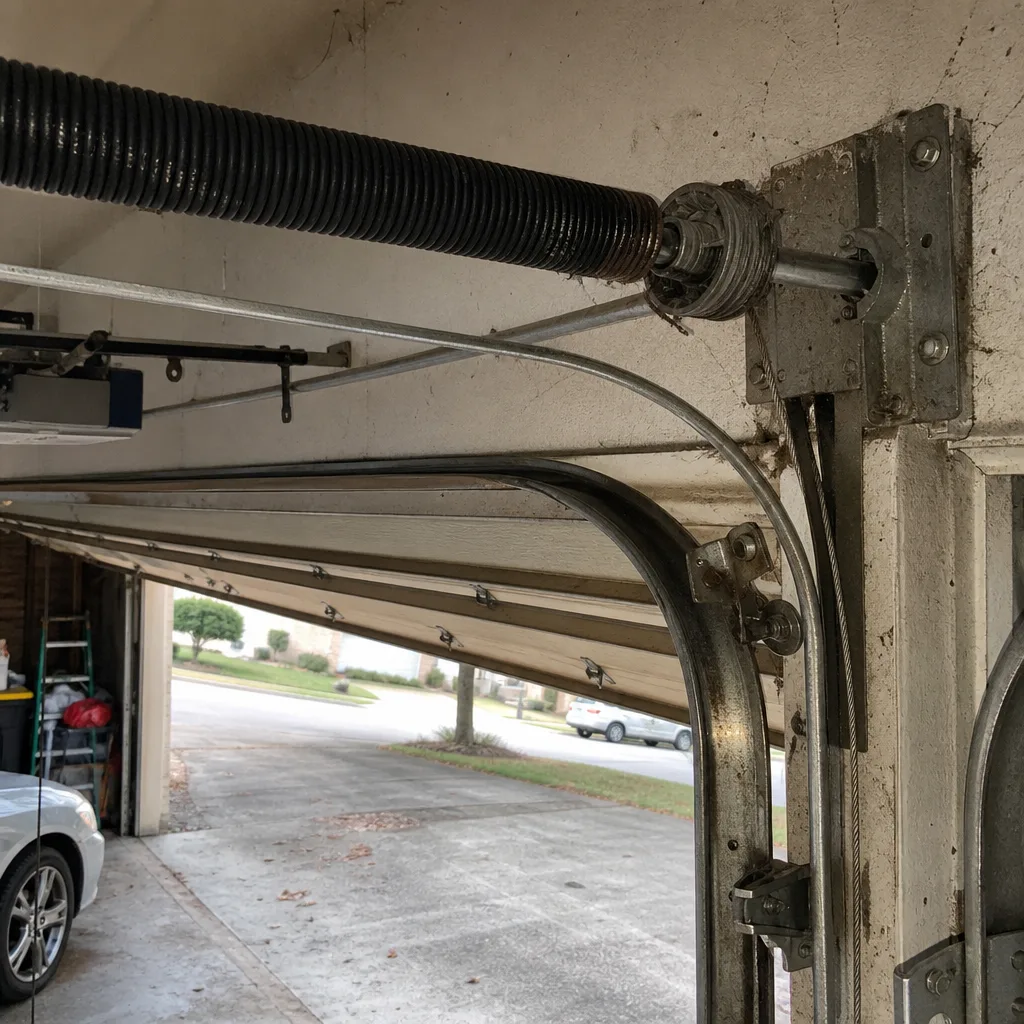
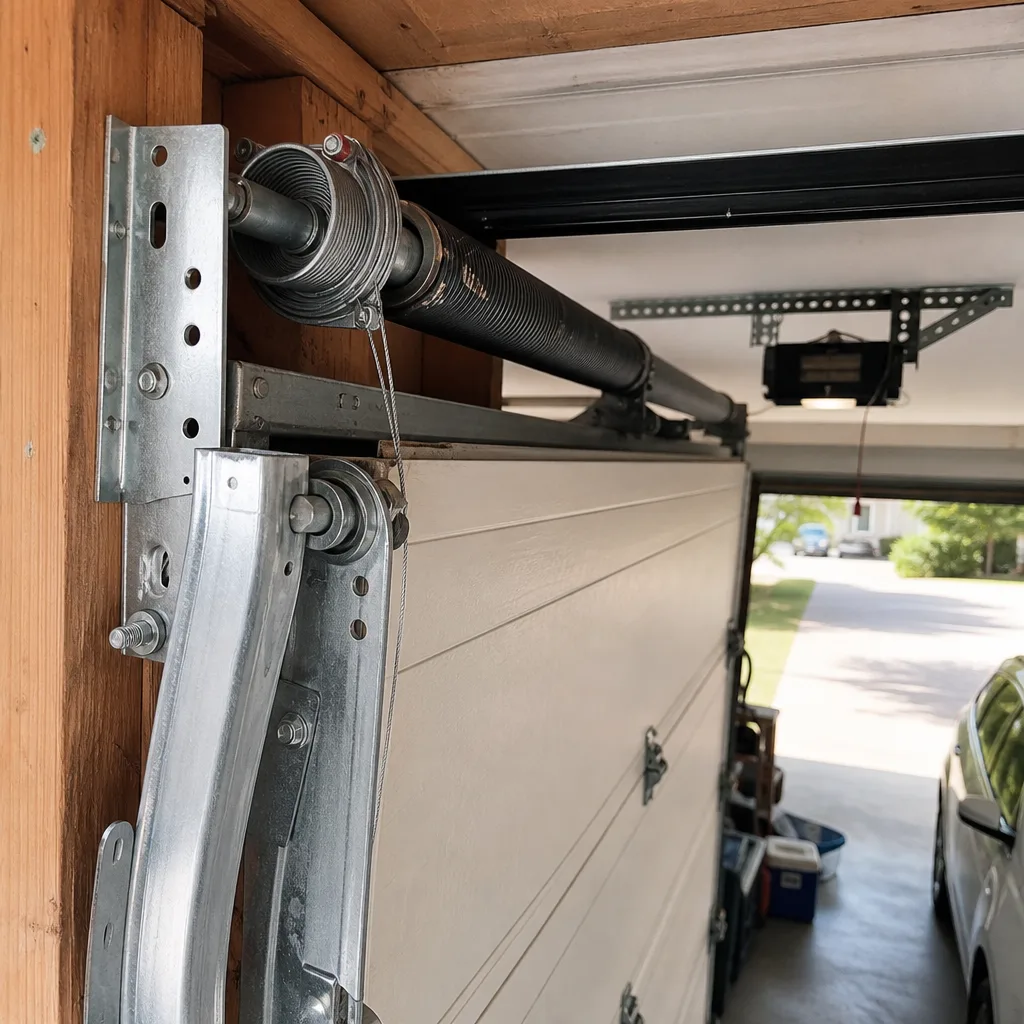
Spring fatigue. The torsion springs mounted above the door have a rated cycle life, typically 10,000 to 20,000 cycles for standard springs. A garage door in Schertz cycles roughly 1,200 times per year if you’re a two-car household that leaves and returns once daily. But heat accelerates spring fatigue beyond the rated cycles. A spring that spent the summer at sustained high temperatures in an uninsulated garage may have lost 10 to 15 percent of its rated strength. The symptom is a door that opens unevenly, or one side that hangs lower than the other when fully open. We count spring cycles the way you count tire miles; we’ll tell you what’s left on yours. If your springs are eight years old or older, September is the time to replace them. December is when they’ll fail.
Panel warping. West-facing double doors in Schertz take direct afternoon sun for hours. That heat is uneven, which means the sheet metal expands more where the sun hits than where it doesn’t. Over a full summer, that differential expansion can permanently bow a panel. You’ll see it as a visible curve or a gap that opens at the top or bottom of a panel when the door is closed. A bowed panel won’t unbend itself, and it compromises the seal, which invites pests and drags on the tracks.
Weatherstripping compression loss. The rubber bottom seal and the side weatherstripping both compress under a hot metal door. After one season, the bottom seal may have lost half its thickness, which means gaps that let in heat, dust, and during heavy rain, water. Press the bottom seal with your thumb: if it doesn’t spring back, it’s done. A new seal costs about $40 installed and pays for itself in cooling costs.
Opener thermal damage. A hot opener motor has a shorter life, and by September the heat has had four months to cook the electronics. If the opener is now slow to respond, runs longer than it should, or trips its breaker occasionally, the thermal wear has already happened. Replacing the opener now is cheaper than replacing it in December when it dies. If the opener is straining, the problem is almost never the opener; it’s usually a door that needs rebalancing. Get the door tuned before replacing the motor.
Cold-Snap Prep (November): Preventing the December Broken-Spring Calls
Every December in Schertz we get the same calls. Monday morning, first cold snap of the year, and a spring that’s been quietly fatiguing since July finally lets go with a sound like a gunshot. The homeowner didn’t do anything wrong; the spring was already damaged and the cold just finished it. November is when you prevent that call.
The November check is quick, and it centers on three things:
- Lubricate before the cold arrives. Cold makes lubricant thicker, which is why doors move slower in winter. If you’re using a spray lubricant, do it in November when the temperature is still moderate, and the lube will penetrate properly instead of sitting on the surface in a thin sheet. Coat the hinges, the rollers (not the tracks), the spring coils, and the bearing plates. Wipe off excess. This is the single highest-value maintenance step for winter, because a properly lubricated door moves freely even when the opener motor is cold and sluggish.
- Check the balance in cold conditions. Disconnect the opener (pull the red release cord) and open the door manually to chest height. Let go. A properly balanced door will stay in place or drift very slightly. If it drops, the springs are tired and they’ll get worse as the cold reduces their elasticity. A door that drops on a cold morning is a spring that’s about to break. Call us before it does.
- Inspect the cables. The lift cables on both sides should be taut and clean, with no fraying. A frayed cable in November is a broken cable in January, and when a cable goes, the door drops on one side, which is a dangerous failure. Cables are not a DIY replacement job. They’re under the same tension as the springs and can take off a finger or an eye when they snap.
The cold itself doesn’t break springs. It reveals springs that the heat already damaged. That’s the whole betting line in Schertz: the summer sets the trap, and the first cold morning springs it.
Pollen, Cedar Elm Leaves, and the Debris Problem Nobody Mentions
Every spring, the live oaks and cedar elms around Schertz dump a fine yellow pollen that gets into everything, including your garage door track. Pollen is sticky. It clings to the track, mixes with whatever lubricant is there, and forms a paste that gums up the rollers and makes the door drag. Cedar elm leaves are worse: they’re small and papery, and they blow under the door, pile in the corners, and break down into a gritty dust that works its way into the bottom seal and the track channels.
Here’s what this debris actually does over time:
- It grinds the rollers. Pollen-and-dust paste in the track acts like fine sandpaper. Every door cycle in the spring is scrubbing microscopic metal off the roller shafts and the track surface. After two or three springs of this, the rollers have play, and the door rattles and binds.
- It destroys the bottom seal. The bottom seal closes against the concrete, and any grit trapped beneath it gets pressed into the rubber. Over a season, that grit cuts into the seal and tears it. Replace the seal if it’s cracked or shows embedded grit.
- It misaligns the track. A small pile of debris at the bottom of one track is enough to nudge the door off alignment by a fraction of an inch. That fraction becomes a bind, and the opener motor strains every cycle. Keep the bottom corners of the track swept clean during pollen season.
The fix is simple, free, and takes ninety seconds: sweep the bottom corners of the track once a week from March through June, and wipe the track surfaces with a dry cloth if you see visible pollen buildup. If the door is already dragging or rattling, don’t keep running it. Every cycle is doing wear that adds up. Call us and we’ll clean and realign the track before the damage is permanent. Whether it’s a Genie opener or a Clopay door, the track maintenance is the same, and it prevents most of the failures we get called out for in the spring.
The Schertz Lubrication Schedule: What to Use and What to Skip
Lubrication is the cheapest maintenance you’ll ever do on your garage door, and the most commonly botched. Here’s the straight answer on what to use, when to use it, and what never to put on the door.
What to Use
- Spray lithium grease or white lithium grease for the hinges, spring coils, and bearing plates. It doesn’t attract dust the way oil does.
- Silicone spray for the weatherstripping and bottom seal. It keeps the rubber flexible and prevents it from freezing to the concrete in cold weather.
- A dry lubricant (graphite or PTFE) for the opener rail and the chain or belt. Grease on the rail turns into a dust magnet and the door will be louder in three weeks.
When to Do It in Schertz
- April: Full lubrication before the heat hits. This is the one that matters most, because summer dust and pollen stick to fresh grease and form a paste if you skip it in April.
- September: Light re-application after the summer dust settles. Clean off the old paste first, then re-lube.
- November: Quick pass on hinges and springs to make sure cold-weather operation is smooth.
What to Skip
- WD-40 on the springs or hinges. It’s a degreaser, not a lubricant. It will strip existing lube and make the door louder and stiffer.
- Motor oil or gear oil. It attracts dust, gums up, and in the summer heat it thins out and drips onto the floor and the car roof.
- Lubricating the tracks. The rollers run on the track, and they don’t need slip there. Grease on the track just collects pollen and creates the paste problem described above.
If the door is still noisy after lubrication, the problem isn’t lubrication. It’s a worn roller, a bent track, or a failing spring. At that point, the door is talking to you, and the answer isn’t more spray.
Common Mistakes to Avoid
- Ignoring the auto-reverse because the door “has always worked fine.” Auto-reverse settings drift over time from vibration and heat cycles. A door that worked in March may be unsafe by July. Test it twice a year, minimum.
- Lubricating the tracks instead of the rollers. This is the single most common DIY mistake we see in Schertz. It creates a sticky surface that collects pollen, and within a month the door drags worse than before.
- Replacing the opener without checking the door balance. A new opener on an unbalanced door burns out the same way the old one did, just slower. Balance check first, then opener replacement if needed.
- Waiting until the door won’t open to call. By the time a door fails completely, the part that failed has been sending signals for months: noise, slowing, uneven movement. Early repair costs less than emergency replacement, and no trip charge inside the home county means we can look at it before it fails.
- Oil-based lubricants in the summer. Motor oil on the springs thins in heat and drips. By September, the door is louder and the garage floor has oil stains. Use spray lithium grease only.
- Ignoring the west-facing door. The door that gets afternoon sun through July and August ages faster than any other part of the house. If you do nothing else, give that door the full April and September checks.
When to Call a Professional
Some things on a garage door are routine maintenance, and some things will hurt you. Anything with the torsion springs or lift cables is in the second category. These parts carry hundreds of pounds of tension, and when they release unexpectedly, they release violently. If your door has broken springs, frayed cables, a bent track, or a persistent noise that lubrication didn’t fix, leave it closed and call someone. Likewise, if the door is off-balance enough that it drops when you release it manually, do not try to fix the balance yourself. Otto’s Garage Door offers free estimates in Schertz, and the phone number is (830) 341-1180. A live person answers when you call, not a machine.
Frequently Asked Questions
Lubricate the hinges, spring coils, and bearing plates three times per year in Schertz: late April before the heat, September after the summer dust settles, and November before cold weather. You’ll use spray lithium grease on moving metal parts and silicone spray on the weatherstripping. Skipping the April lubrication means summer pollen will mix with old grease and form an abrasive paste inside the track, which is the main cause of roller wear around here. Call (830) 341-1180 if you’d rather have us do the full service during your April checkup.
Garage door springs rarely break because of the winter cold itself; in Schertz, the damage is done during the summer. Six months of sustained heat above 95 degrees accelerates spring metal fatigue, and the first cold snap simply reveals the weakened spring when the metal contracts. If your springs are older than eight years, replace them in September or October. Replacing them before the cold snap costs less than replacing them after the December failure, and you won’t be stranded with the door closed and the vehicle inside.
You should not. Torsion springs are under enough tension to remove a limb or kill you if they release while you’re working on them, and the special bars and technique required are not something to learn from a video. The same applies to lift cables. These are the two parts on a garage door that we tell every homeowner to leave alone, no matter how handy they are. Call (830) 341-1180 and we’ll replace the springs the same day.
Spray white lithium grease is the best general-purpose garage door lubricant for Schertz summers because it doesn’t thin out and drip in 100-degree heat and it doesn’t attract dust the way oil-based products do. Use silicone spray on the rubber weatherstripping and bottom seal, and a dry PTFE lubricant on the opener rail. Never use WD-40, which strips existing lubricant and makes the door louder.
Close the door on a 2×4 placed flat on the ground under the center of the opening. The door should hit the board and reverse within one to two seconds. Then, while the door is closing, wave your hand through the photo-eye beam; the door should stop and reverse. If either test fails, the auto-reverse is not working and the door is unsafe. A Garage Door Opener in Schertz can be adjusted to fix the force setting in about twenty minutes.
A garage door tune-up in Schertz generally runs between $89 and $180, depending on what needs adjustment. The price includes a full inspection, lubrication, balance check, auto-reverse testing, and tightening of all hardware, and the price is quoted before the visit and held when we arrive. Otto’s Garage Door also offers a Free Second Opinion on any written estimate and no trip charge inside the home county, so calling for a quote costs you nothing. Call (830) 341-1180 for an exact number on your door.
The Bottom Line
Schertz garage doors don’t fail randomly. They fail on a schedule that the heat and the wind set, and the homeowner who knows that schedule is never surprised. April is for preparing the door before the heat. May is for making sure the safety systems will survive the storms. September is for assessing what the summer did. November is for preventing the winter break. Add the free weekly debris sweep during pollen season, and you’ve prevented the bulk of what we get called out for all year. If you catch something on any of these checkups you’d rather not handle yourself, call Otto at (830) 341-1180. You can also find more guides & resources on our blog. The name on the van is the same name on the license, and the estimate we give on the phone is the invoice you’ll pay.
Written by Otto Reinhardt, Owner at Otto’s Garage Door, serving Schertz since 2004.