
Last updated September 11, 2026
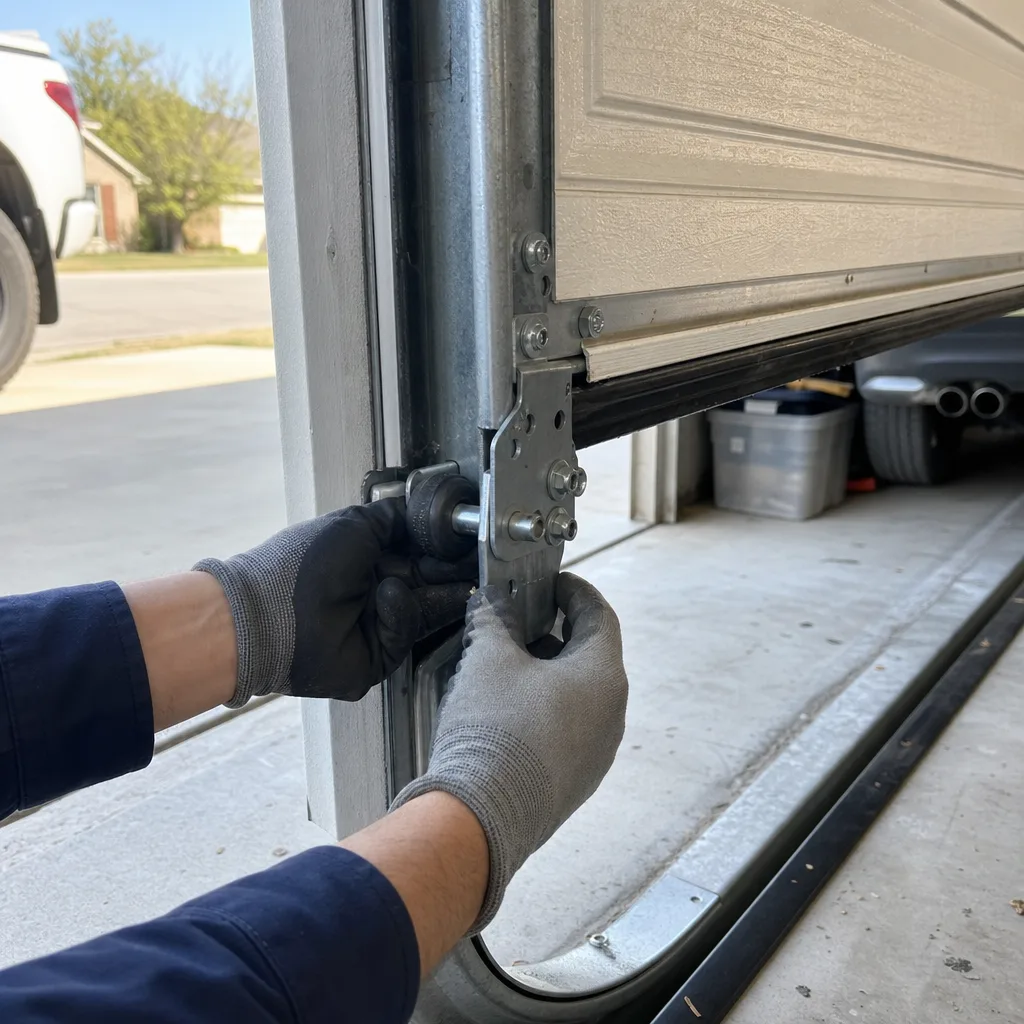
Full 25-point door and opener safety check with every visit - springs, cables, rollers, tracks, and your LiftMaster or Chamberlain opener included
You get a price before we start. It does not change when the truck arrives.
 Before
 After
After Before
 After
After Before
 After
AfterGarage Door Cost Breakdown: The Schertz Homeowner’s Reference for 2026
Here’s a number that catches most Schertz homeowners off guard: three contractors can quote you $650, $1,100, and $1,800 for what sounds like the same garage door spring replacement, and all three can be telling the truth. The gap isn’t dishonesty. It’s the difference between three completely different jobs that only one of them bothered to explain. This guide-along with our Garage Door Warning Signs: A Schertz Homeowner’s Reference Guide-walks you through exactly what creates that spread, line by line, so you can read a quote like someone who’s been in the trade for twenty years. By the end, you’ll know what you’re actually paying for when you see a number on paper, and which line items deserve your scrutiny.
Quick Answer
Most garage door repairs in Schertz run between $180 and $450 in 2026, while a full door replacement typically lands between $1,100 and $3,200 depending on material, insulation, and hardware grade. Spring replacement, the single most common job, costs $220 to $480 for a pair depending on whether you choose standard or high-cycle springs. The difference between quotes usually comes down to hardware quality, not labor, and we’ll show you exactly how to tell which you’re being offered.
Table of Contents
- Garage Door Springs: What They Actually Cost
- Labor Rates and Overhead: Why Quotes Differ by $400 or More
- Parts Markup: What Wholesale vs. Invoice Really Looks Like
- Builder-Grade vs. Commercial-Cycle Hardware: The Spec That Matters
- What Every Common Schertz Job Costs in 2026
- The Real Cost of the Cheapest Quote
- Common Mistakes to Avoid
- When to Call a Professional
- Frequently Asked Questions
Garage Door Springs: What They Actually Cost
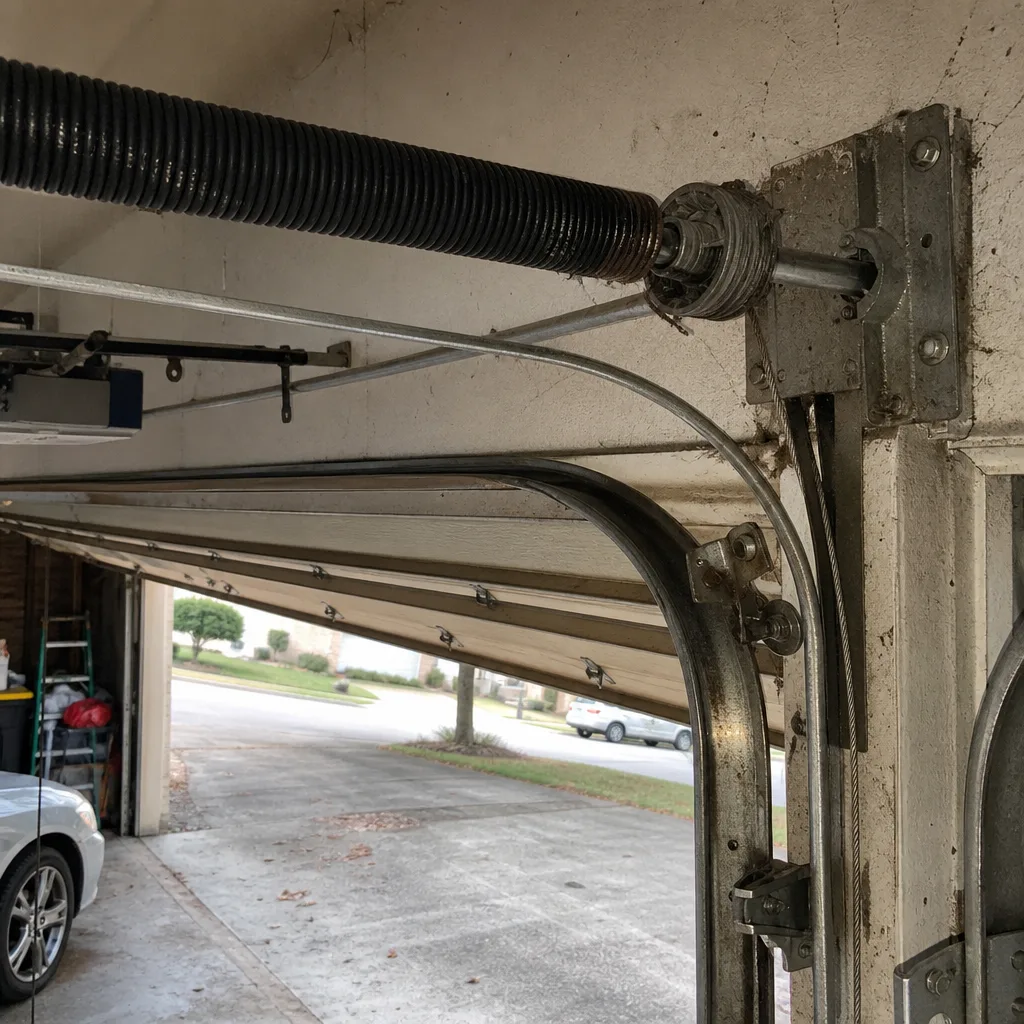
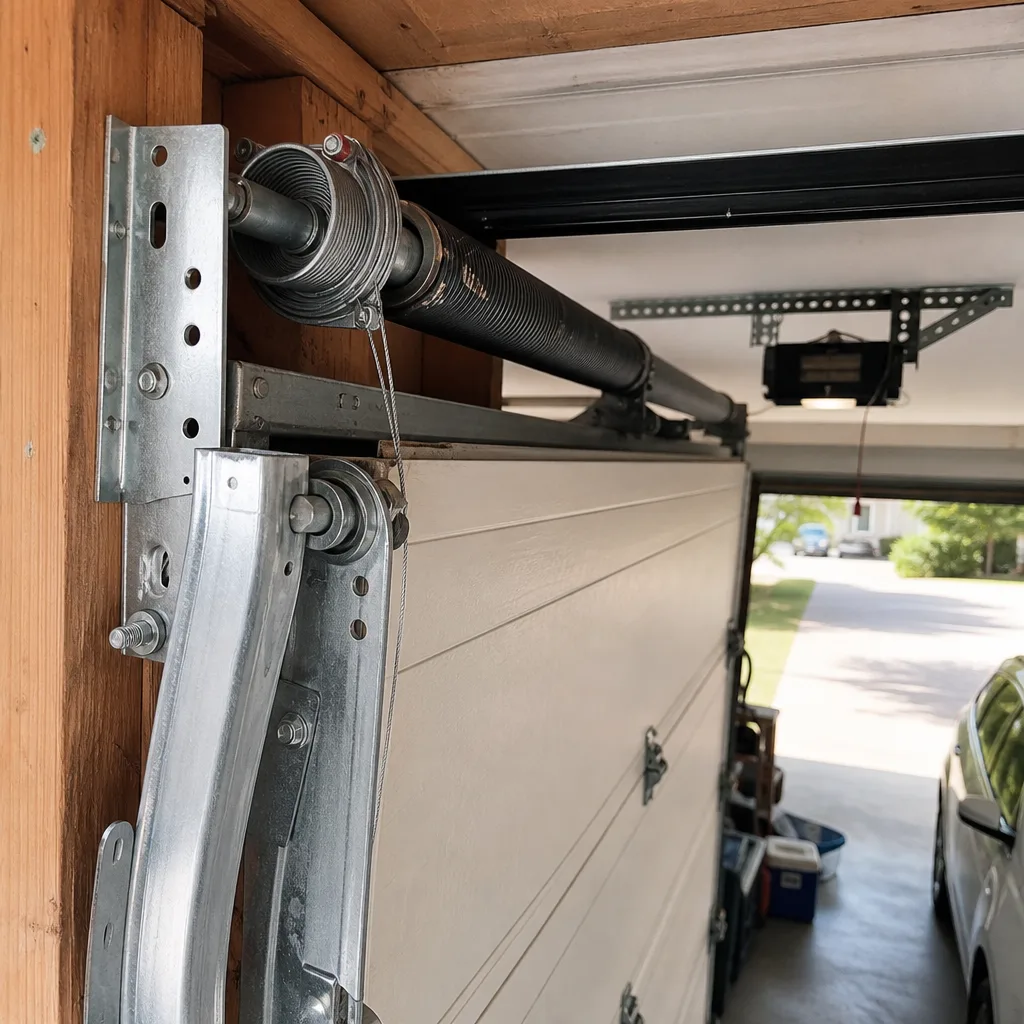
A torsion spring at wholesale costs between $25 and $60. The same spring on a residential invoice appears at $120 to $280. That markup isn’t a scam, it’s the price of the skill, the liability, and the fact that a spring under tension can kill someone who doesn’t know what they’re doing. We count spring cycles the way you count tire miles. A standard spring is rated for roughly 10,000 cycles. A high-cycle spring runs 25,000 to 30,000 cycles. The hardware difference is about $20 to $40 per spring. The labor is identical. Yet many companies in Schertz quote the standard spring and never mention the option, because the cheaper number wins the job over the phone.
Here’s what the spring line items look like in 2026:
- Single torsion spring replacement: $180 to $260 (standard cycle) or $240 to $340 (high-cycle)
- Double torsion spring replacement: $300 to $480 (standard) or $380 to $560 (high-cycle)
- Extension spring pair: $160 to $240, though these are increasingly rare on modern doors in the Schertz area
When a quote lists one spring instead of two, that’s worth a question. Most double-car doors run on two springs. If one has snapped, the other has the same cycle count and the same fatigue. Replacing one spring is like replacing one tire on a truck with 60,000 miles on both. It gets the door open. It doesn’t fix the problem. A door is 200 pounds riding on two springs. Respect it.
We serve garage door repair in Schertz and surrounding areas, and we replace springs in pairs as a rule, not as an upsell.
Labor Rates and Overhead: Why Quotes Differ by $400 or More
An owner-operator in Schertz has a truck, a license, and a phone. A franchise operation has a dispatch center, a national ad budget, a regional manager, and a fleet lease. All of that overhead lands on your invoice. The labor rate difference looks like this: an owner-operator typically bills $75 to $120 per hour for garage door work in the Schertz market. A franchise shop often bills $140 to $200 per hour to cover its burn rate before the first bolt gets turned. Neither one is cheating you. Only one of them tells you where the money goes.
That spread explains most of the quote gap homeowners see. A spring job that takes 90 minutes costs $180 in labor from a local shop and $280 from a franchise, before parts enter the picture. The work is the same. The warranty might even favor the local shop, because the person who answers when something fails is the person who did the job, not a callback queue three states away.
Here’s how to read labor on any quote you receive:
- Ask for the hourly rate in writing. Many companies won’t list it, but a straight answer tells you who respects the question.
- Ask who shows up. If the person quoting your job can’t or won’t say whether the person doing the job works for the company or as a subcontractor, walk.
- Look for a published address. A real shop has a real location you can drive past. A P.O. box and a 1-800 number don’t.
- Compare total quote, not line items. A $600 job from a local shop often outperforms an $850 job from a franchise, because the local shop’s overhead doesn’t include a marketing department.
Otto Reinhardt has been answering his own phone since 2004. The name on the van is the name on the invoice and the name on the license. That’s not a marketing line, it’s the business model, and Schertz homeowners can verify it before the truck leaves the driveway.
Parts Markup: What Wholesale vs. Invoice Really Looks Like
Every trade marks up parts. Plumbers mark up fixtures. Mechanics mark up brake pads. Garage door companies mark up springs, rollers, cables, and openers. The question isn’t whether a markup exists, it’s whether the margin is fair given what the job demands. A torsion spring costs $30 at wholesale and shows up at $180 on an invoice. That’s a 6x markup, which sounds outrageous until you factor in what you’re actually buying: the expertise to select the right spring, the tooling to tension it safely, the liability insurance that pays if it fails, and the warranty that brings someone back free if it does.
Garage door parts bear a real risk that most household hardware doesn’t. A spring holds enough stored energy to break bone or worse if mishandled. A cable under load can slice. The markup is what you pay so the person holding the winding bars knows exactly what they’re doing. That said, markup should be transparent, not buried. A quote that says “spring replacement: $480” tells you nothing. A quote that says “two 25,000-cycle torsion springs: $310 parts, $170 labor” tells you everything. Ask for the break.
Here’s what typical wholesale costs look like for common parts in 2026, so you can spot a fair margin when you see one:
- Torsion spring (standard): $25 to $45 wholesale, $120 to $200 invoiced
- Torsion spring (high-cycle): $45 to $70 wholesale, $160 to $260 invoiced
- Roller set (10 nylon): $20 wholesale, $60 to $90 invoiced
- Cable pair: $15 wholesale, $50 to $80 invoiced
- Hinge set: $30 wholesale, $80 to $130 invoiced
The job’s difficulty and danger justify the margin. But nothing justifies a quote that hides the hardware spec. If a number appears without a spring cycle rating or a roller material, ask for it before you sign.
Builder-Grade vs. Commercial-Cycle Hardware: The Spec That Matters
When a builder puts up a hundred homes in a new Schertz subdivision, the garage doors get builder-grade hardware: 10,000-cycle springs, plastic-bushed rollers, and the cheapest cables that pass inspection. That hardware works. It lasts three to five years under normal use. Then it fails, and the homeowner who bought the house three years ago gets a surprise invoice. This isn’t a scam either, it’s economics. The builder paid the lowest unit price per house, and the door company within budget delivered it.
The alternative is commercial-cycle hardware: 25,000 to 30,000-cycle springs, sealed-bearing nylon rollers, and heavier-gauge cables. The parts cost $60 to $120 more per job. The labor is the same. What that buys you is roughly three times the service life. It’s the difference between a spring that breaks in 2029 and one that breaks in 2035.
When you’re comparing quotes, ask one specific question: “What cycle rating are the springs you’re quoting?” If the answer is a blank stare or “standard,” you’re being offered builder-grade. That’s fine if you’re selling the house next year. It’s a false economy if you’re staying. Here’s what to look for on the quote itself:
- Spring cycle rating: Look for 25,000 or higher. The word “high-cycle” should appear in writing.
- Roller material: Nylon with sealed bearings runs $8 to $12 per roller versus $3 for plastic-bushed steel. It’s quieter and lasts years longer.
- Cable gauge: 7/16-inch aircraft-grade cable outlasts the thinner builder stock by years.
- Bracket thickness: Commercial brackets are visibly heavier. You can feel the difference in your hand.
We install garage door installations in Schertz with commercial-cycle hardware as standard practice when a customer plans to stay in the home. If you’re selling, builder-grade makes sense. If you’re staying, the upgrade pays for itself the first time you don’t need a callback.
What Every Common Schertz Job Costs in 2026
Here’s the full picture for Schertz homeowners, broken down by job type. These numbers reflect what we see in the local market, not a national average that might not apply here. Schertz has a mix of 1990s and 2000s construction, plus newer subdivisions pushing north toward Cibolo, and the hardware in those homes varies accordingly.
Spring Replacement
Covered in detail above. Expect $220 to $560 depending on single vs. double, standard vs. high-cycle. This is the most common emergency call we get in Schertz, and it’s the job where quote gaps are widest. If the opener is straining, the problem is almost never the opener. It’s the spring.
Cable Replacement
$160 to $240 per pair. Cables snap when springs break, which is why a spring quote should always include a cable check. A snapped cable with an intact spring is rarer, usually caused by a frayed edge catching a pulley. If we’re replacing springs, we replace cables at the same visit, because the labor is already there and the marginal cost is small.
Roller Replacement
$120 to $220 for a full set of ten. Nylon rollers with sealed bearings cost more than plastic-bushed steel but run quieter and last two to three times longer. If your door sounds like a freight train in the morning, this is usually the fix.
Panel Replacement
$300 to $700 per panel depending on material and finish. Steel panels cost less than wood-grain composite. If more than two panels are damaged, a full door replacement often makes more sense, because the new panels won’t match the weathered ones on the rest of the door.
Full Door Replacement
$1,100 to $3,200 installed. A basic steel single door runs $1,100 to $1,600. Insulated double-layer doors land at $1,800 to $2,500. Wood-look or composite doors with insulation run $2,500 to $3,200. The spread depends on insulation R-value, panel gauge, and hardware grade. This is a measured, scheduled job, not an emergency call.
Opener Swap-Out
$380 to $650 for a new opener installed, depending on horsepower and drive type. Belt drives cost more than chain drives but run quieter, which matters if your bedroom sits above the garage. We’re trained across LiftMaster, Chamberlain, Genie, and Raynor, so the garage door opener in Schertz you choose depends on the door weight and your noise tolerance.
Opener Repair
$140 to $280 for gear replacement, circuit board issues, or sensor alignment. Most opener problems trace to the photo-eye sensors or the gears inside the unit, not the motor itself. We diagnose before we quote, and the diagnosis is free inside our county.
The Real Cost of the Cheapest Quote
Let’s do the math on the $280 spring job. A company quotes you a single standard spring, installed, for $280. That’s below the market range we listed above. Here’s what that quote typically means: one spring instead of two, 10,000-cycle hardware, no cable inspection, and a 30-day warranty. The spring breaks again in three years. You pay another $280, plus the second spring you should have replaced the first time. Total cost over five years: $560, plus two trips to the door with a car trapped inside.
Now look at the $420 job: two high-cycle springs, new cables, a roller inspection, and a written 90-day guarantee. The springs are rated for 25,000 cycles. In a household where the door opens four times a day, that’s seventeen years of service. Total cost over five years: $420. The cheaper quote cost $140 more, and that’s before factoring in the inconvenience of two failures.
The cheapest quote isn’t always a bad quote. Sometimes it’s an honest owner-operator with low overhead. But when a price looks too good to be true in Schertz, ask what’s actually included. Here’s the five-year cost comparison in plain numbers:
- $280 job (single standard spring, no cables, 30-day warranty): fails in 3 years, second repair $280, total $560 plus two service calls
- $420 job (double high-cycle springs, new cables, 90-day warranty): rated for 15+ years, total $420
- Difference: the “cheap” job costs $140 more over five years, plus the hassle of two breakdowns
Ask anyone on your street. We’ve been in this county since 2004, and Otto is a palindrome: reads the same from either end, same as the door. The name hasn’t changed, because the work hasn’t.
Common Mistakes to Avoid
- Accepting a quote without a line-item breakdown. A single number tells you nothing about what’s being installed. Demand parts listed separately from labor, with hardware specs named. If the company won’t provide it, they’re hiding something.
- Replacing one spring when the door uses two. Springs fatigue at the same rate. Fixing one is a half repair that guarantees a return trip. This is the single most common short-cut we see in the Schertz market.
- Choosing materials purely by price. A steel single-layer door costs less upfront than an insulated door, but if your garage walls adjoin living space, the energy loss shows up in your CPS Energy bill every month.
- Ignoring the cycle rating on springs. “Spring replacement” is meaningless as a spec. 10,000 cycles and 25,000 cycles are two different products with two different lifespans. Ask which one you’re buying.
- Skipping the cable check when springs fail. When a spring snaps, the cable often takes damage at the drum. A spring replacement that leaves damaged cables in place sets up the next failure for free.
- Paying a trip charge before the work is quoted. Inside our home county, we don’t charge to show up and give you a number. Some companies meter the visit itself. Ask before you schedule.
- Assuming a franchise quote is automatically better. National brands bring scale, but scale brings overhead. A local shop with a published address and a named owner often delivers better work at a lower price, because there’s no dispatch layer eating the margin.
When to Call a Professional
Some garage door jobs are genuinely dangerous. Torsion springs under tension store enough energy to maim or kill if mishandled, and cable work under load carries the same risk. If your spring has snapped, if a cable is frayed, or if the door is off its track, leave it alone and call someone who does this work every day. The same applies to any job involving the opener’s electrical connections. A trained eye can often spot a failing spring or cable before it lets go, which is why an annual inspection costs far less than an emergency call-and why understanding Garage Door Permits, Codes & Inspections in TX: What You Need to Know matters for any major work. Otto’s Garage Door offers free estimates in Schertz, call (830) 341-1180. A live person answers, often Otto himself, and the number he quotes on the phone holds when he arrives.
Frequently Asked Questions
In 2026, a double spring replacement in Schertz runs $300 to $480 for standard cycle springs and $380 to $560 for high-cycle. Call (830) 341-1180 for an exact quote, estimates are free and we hold the number we give you on the phone.
Yes, spring replacement is a same-day job in nearly all cases. We carry common spring sizes on the truck, so the first visit is usually the only visit. If your spring lets go at nine at night, a live person still answers.
With us, no. The quote Otto gives you on the phone is the price you pay when the work is done. If we find something unexpected, we tell you before we touch it, and we agree on any additional cost in writing first.
Yes. Our trucks stock torsion springs, extension springs, cables, rollers, hinges, and the common opener parts for LiftMaster, Chamberlain, Genie, and Raynor. Most Schertz jobs are completed on the first visit without a supply run.
A full door replacement in Schertz runs $1,100 to $3,200 in 2026, depending on size, insulation, panel material, and hardware grade. We measure and quote in writing before any work is scheduled, and the quote is the price. Call (830) 341-1180 for a free estimate.
For most Schertz homeowners planning to stay in their house more than three years, yes. A high-cycle spring costs $60 to $120 more per pair and lasts roughly three times as long. The math favors the upgrade in nearly every scenario where you’re not selling the home soon.
We service and install all major brands, including LiftMaster, Chamberlain, Genie, Raynor, Clopay, Amarr, Wayne Dalton, and Craftsman. If your opener is straining, the problem is almost never the opener, it’s the spring, but we’ll tell you exactly which part is at fault before quoting any work.
The Bottom Line
Garage door quotes in Schertz spread wide in 2026 because hardware quality varies more than most homeowners realize. A $650 quote and a $1,100 quote often describe the same repair done with different-grade parts and different warranty commitments. The way to evaluate any quote is simple: ask for the spring cycle rating, confirm the labor rate, require a line-item breakdown, and never accept a single spring when the door runs on two. The cheapest quote occasionally wins. The informed quote always does. If you want a number from someone who will still answer the phone in five years, call (830) 341-1180. The estimate is free, and Otto will be the one who picks up.
Written by Otto Reinhardt, Owner at Otto’s Garage Door home, serving Schertz since 2004.