

Last updated September 11, 2026
Full 25-point door and opener safety check with every visit - springs, cables, rollers, tracks, and your LiftMaster or Chamberlain opener included
You get a price before we start. It does not change when the truck arrives.
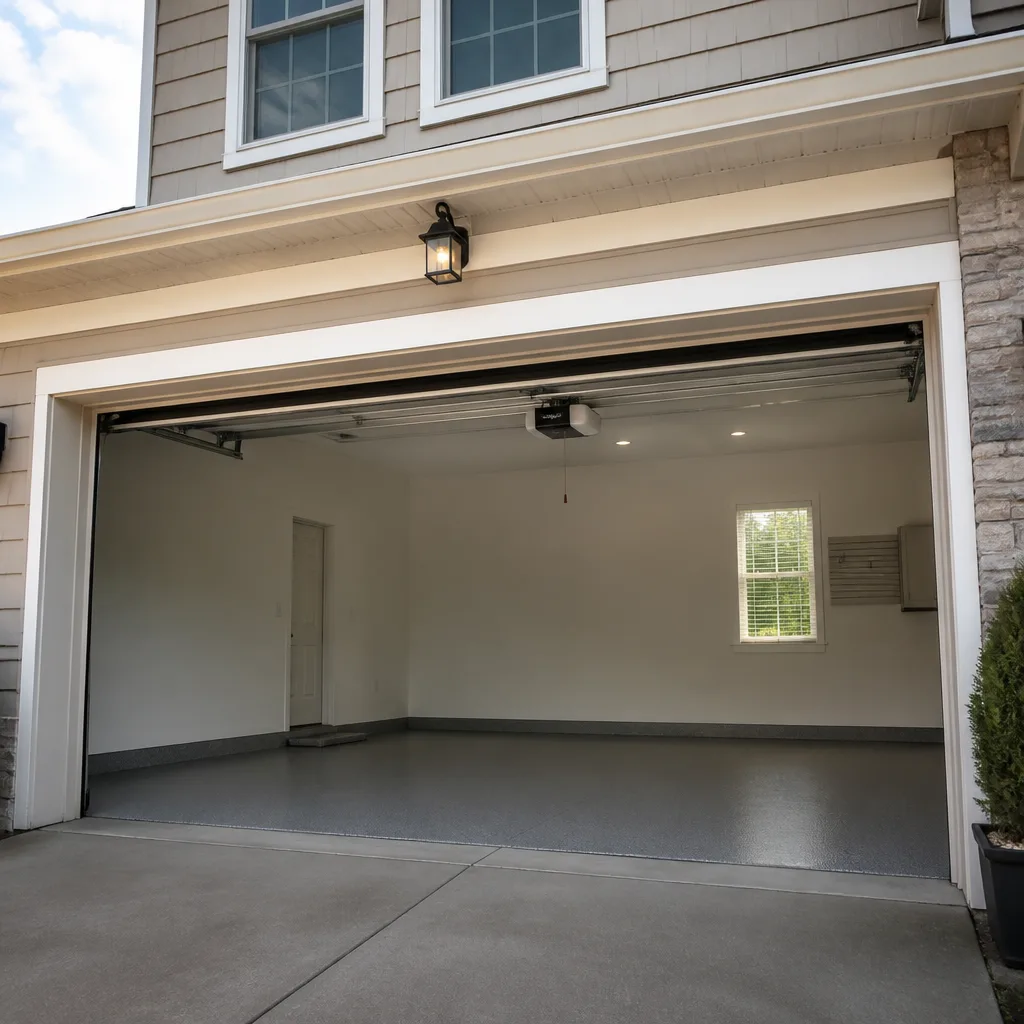
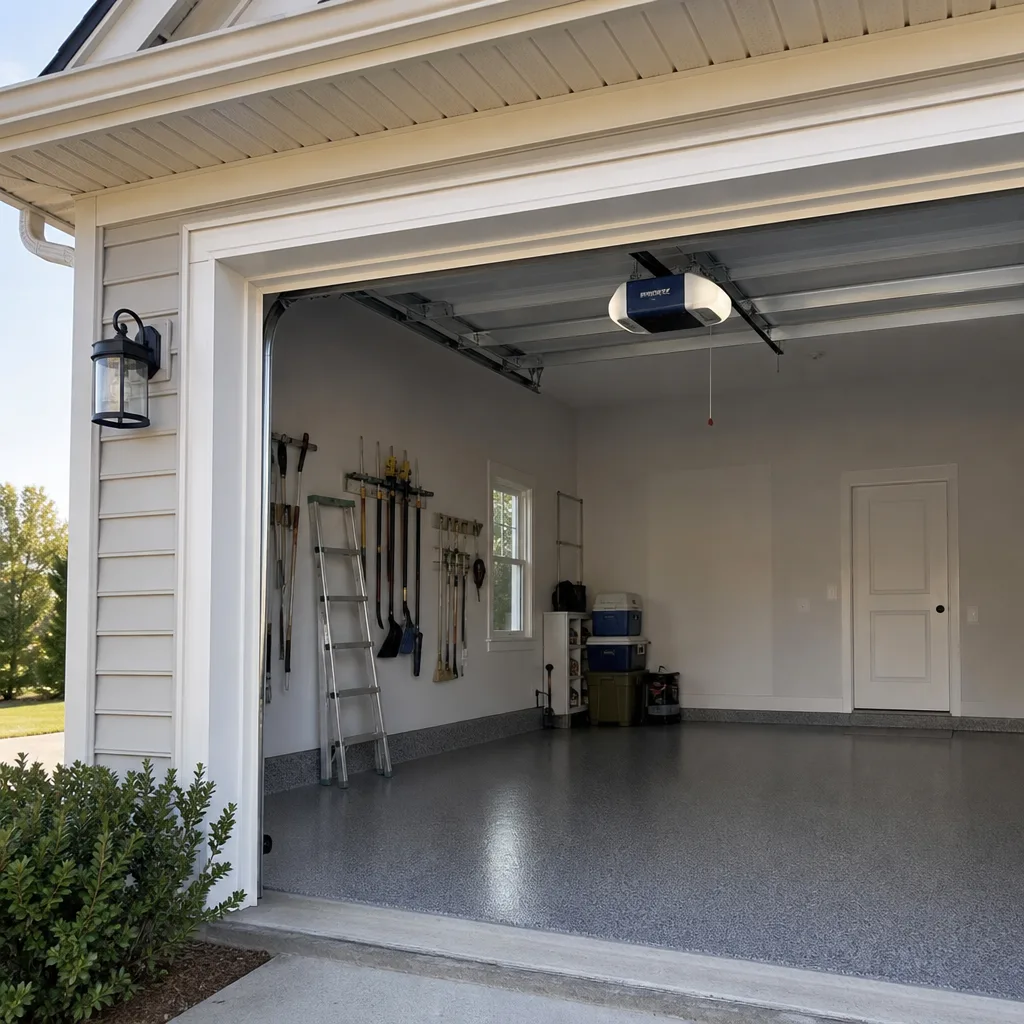
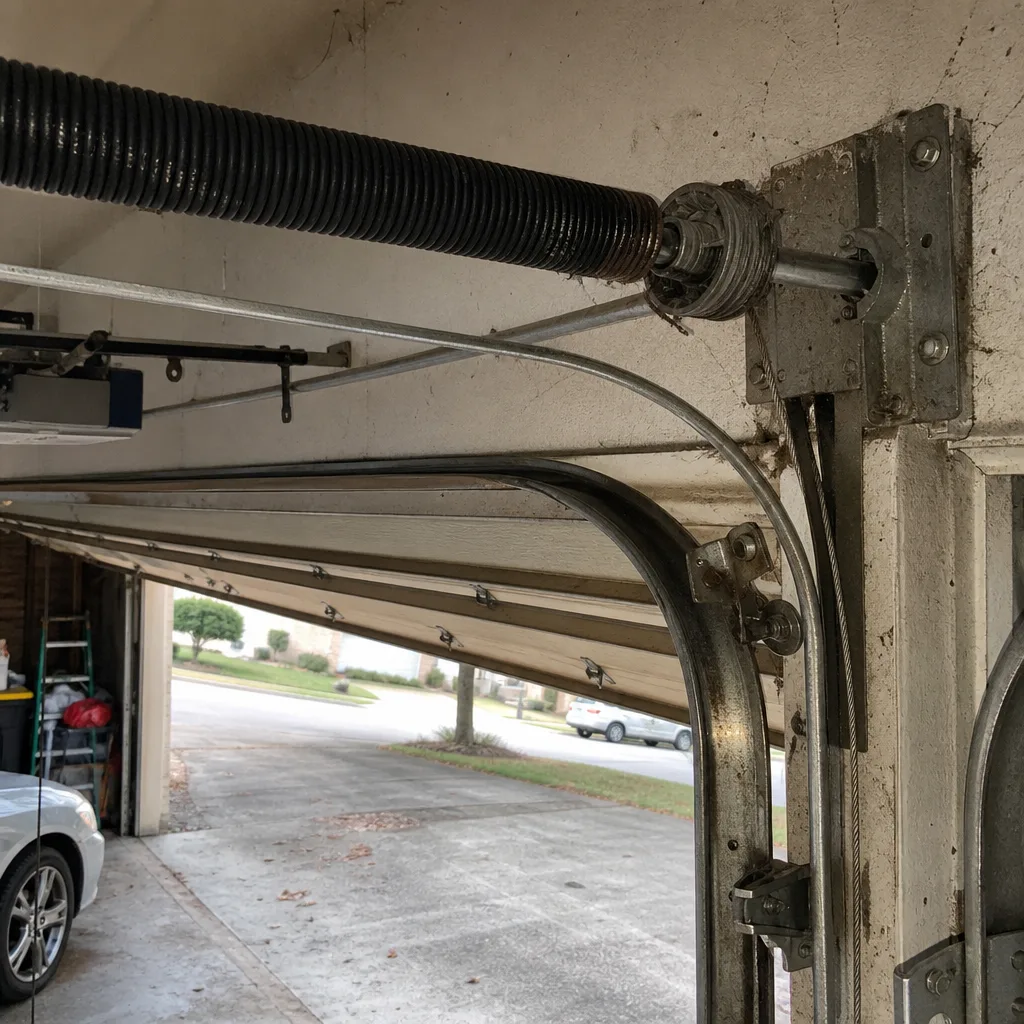 Before
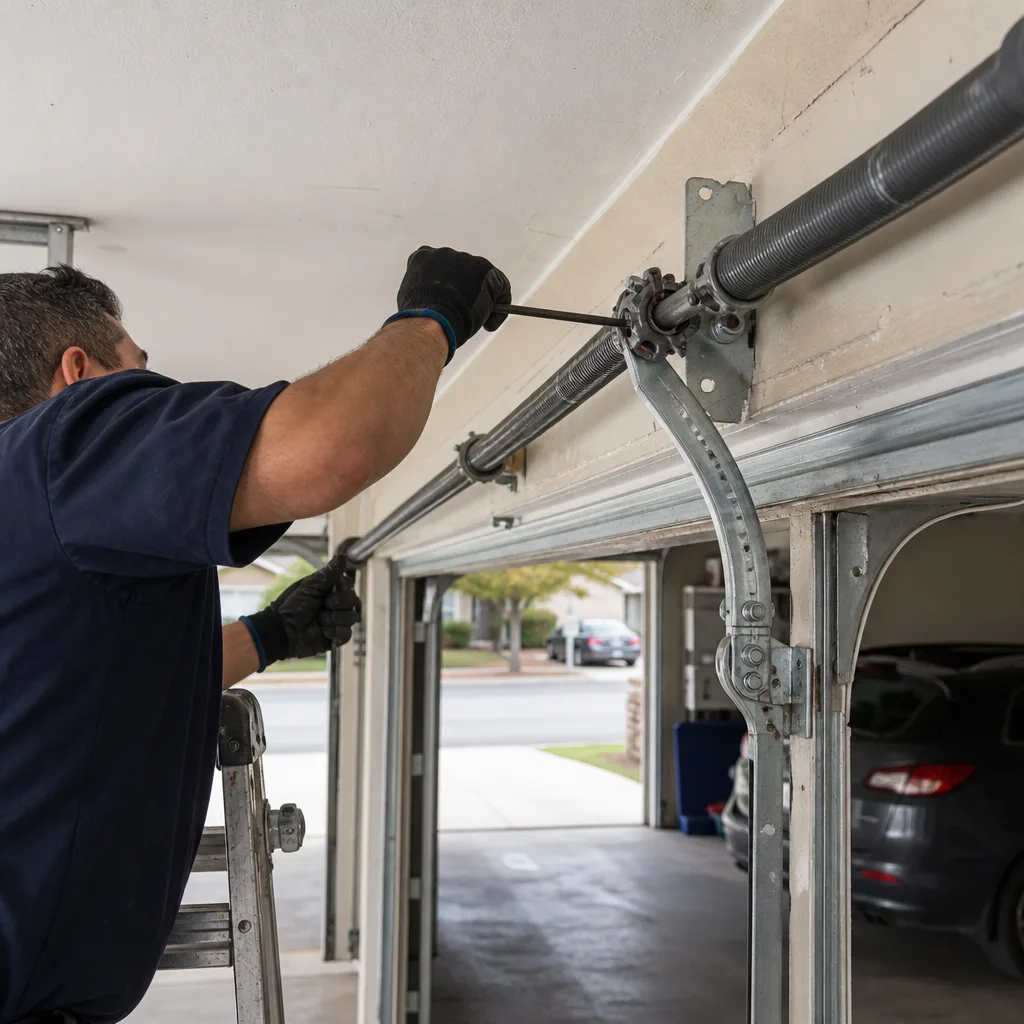 After
After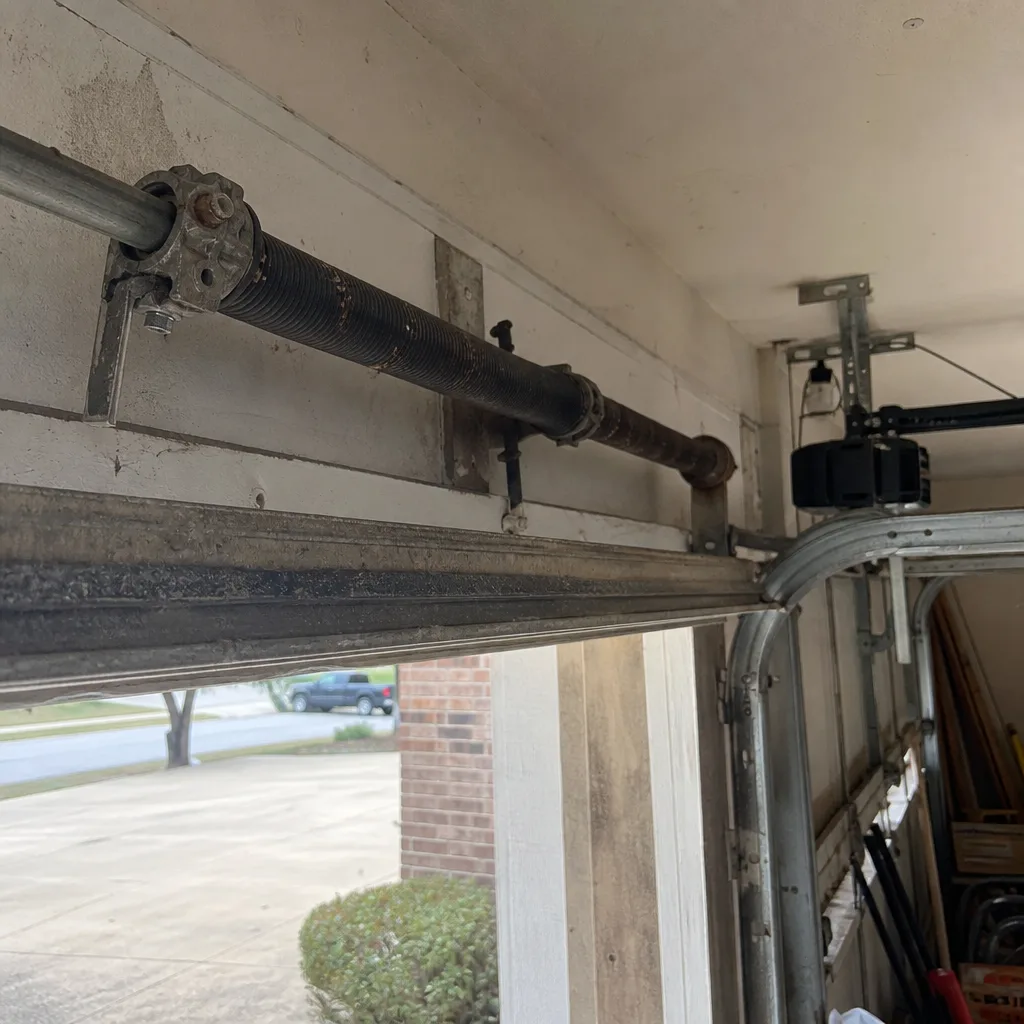 Before
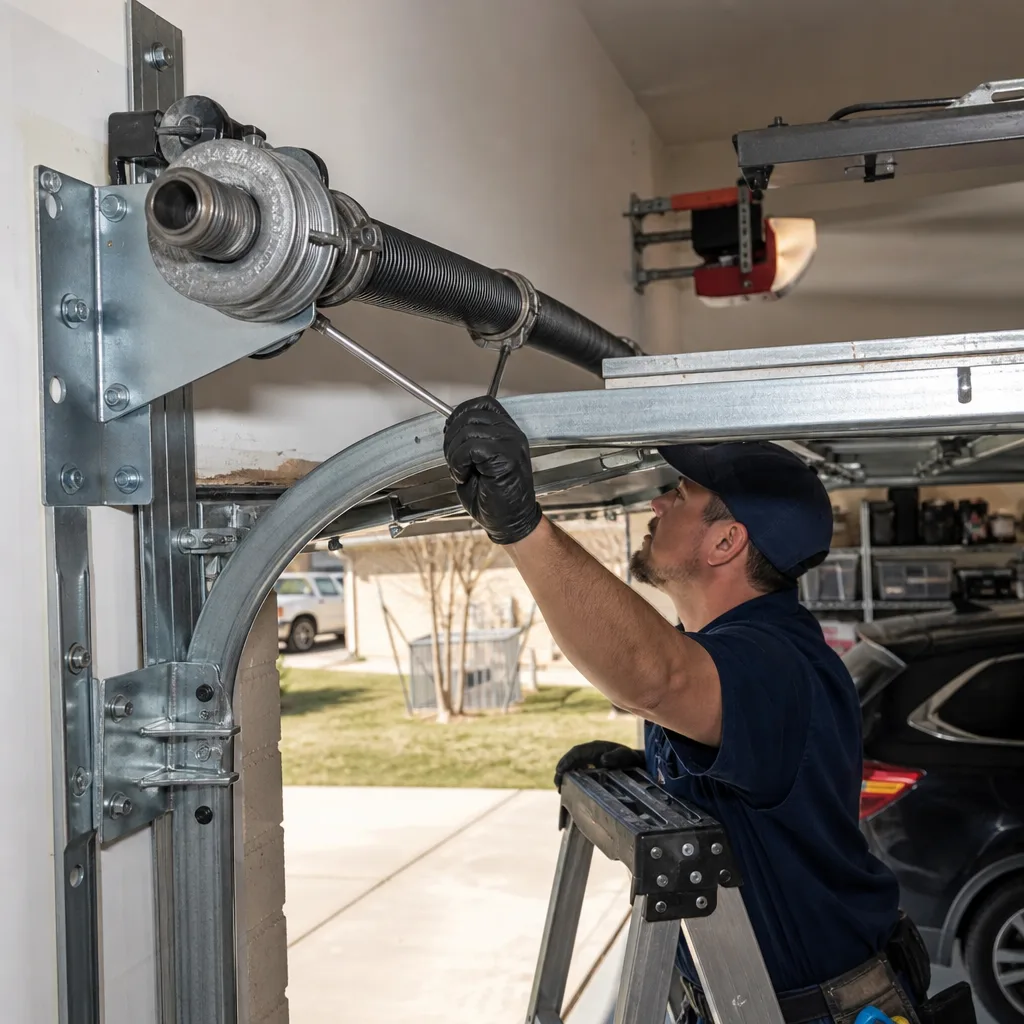 After
After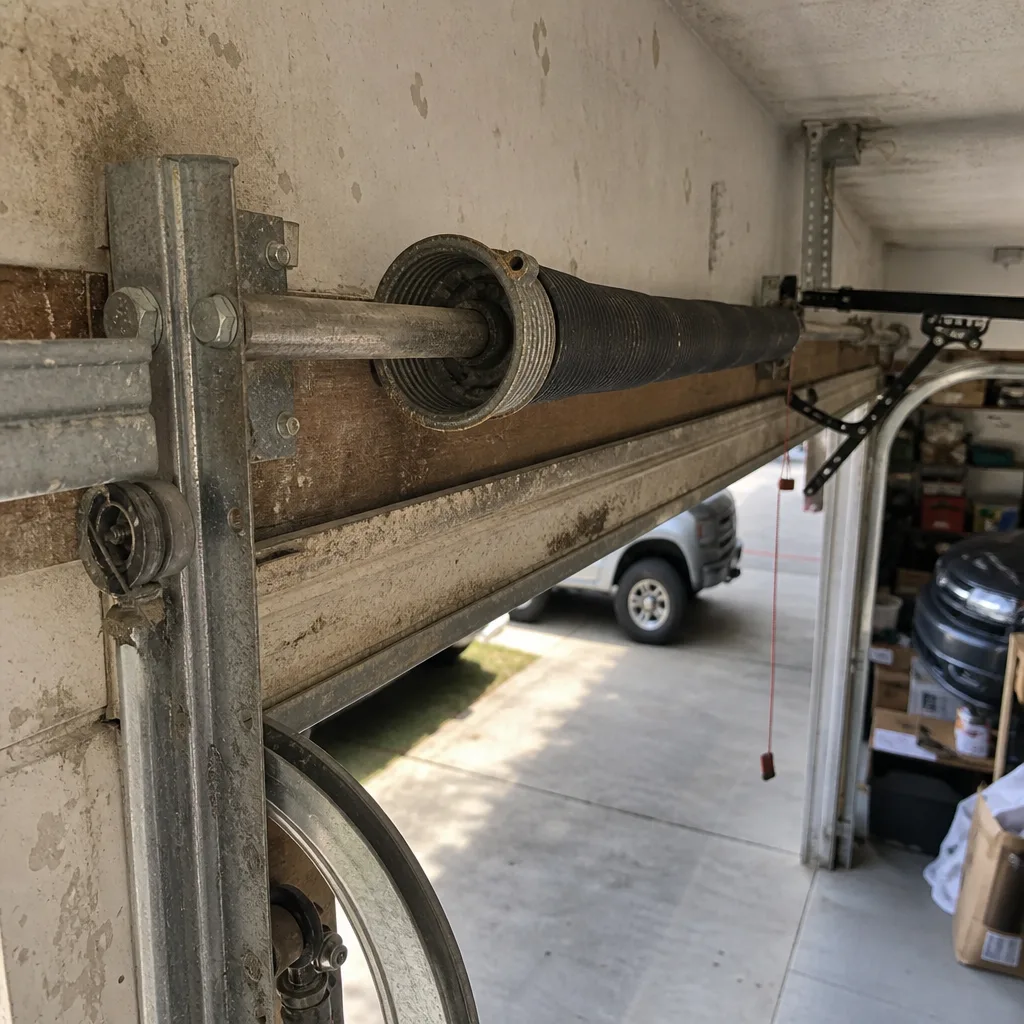 Before
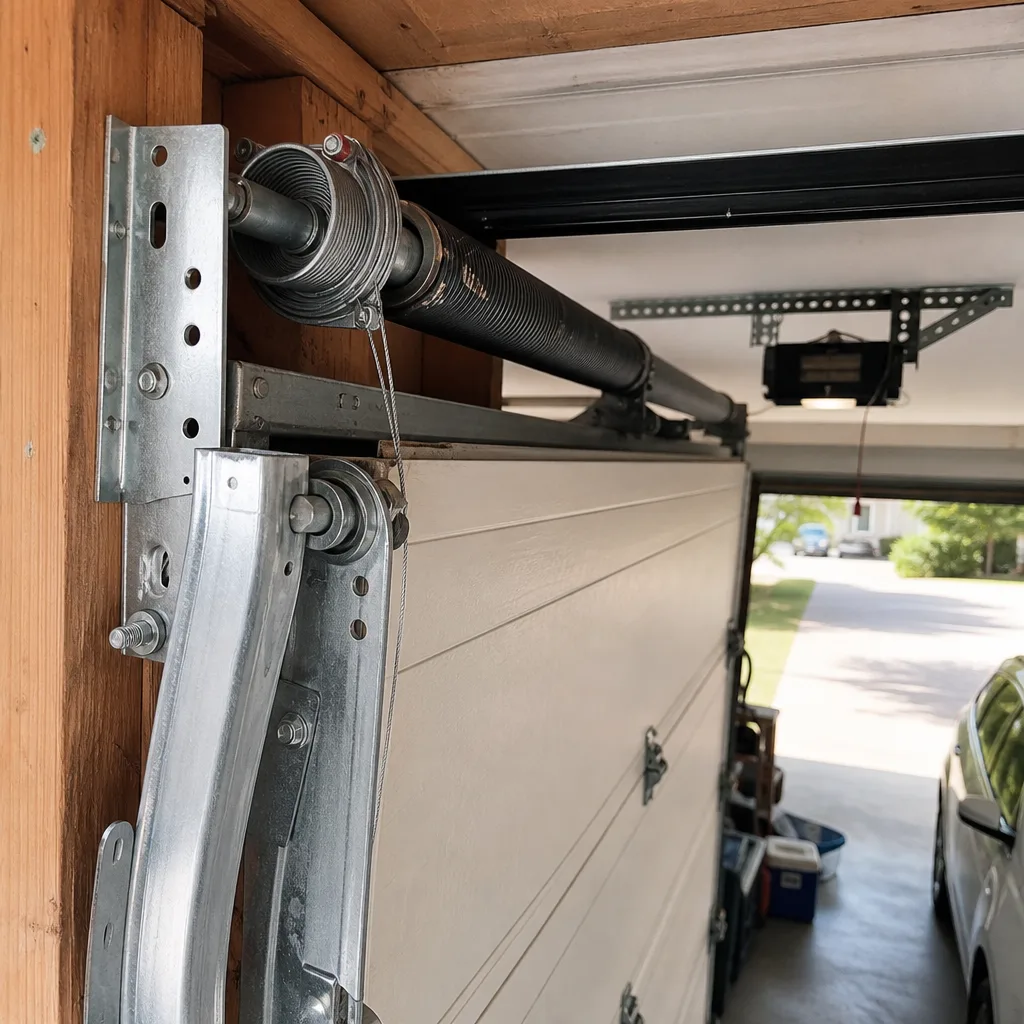 After
AfterThe Complete Guide to Garage Door in Schertz
Here’s a fact most national garage door guides won’t tell you: the average torsion spring in Schertz fails a full two years earlier than the same spring installed in Dallas or Fort Worth. It’s not the heat alone. It’s the combination of 32-plus days above 100 degrees, overnight humidity rolling in from the Gulf, and soil that shifts under concrete slabs with every drought-to-downpour cycle. This guide is written for the homeowner on Wagon Trail Drive, not a statistical average in Phoenix. You’ll learn what actually fails on Schertz doors, what it costs to fix, when a repair makes sense versus replacement, and how to keep a 200-pound door from becoming a 2 a.m. emergency.
Quick Answer
Garage door service in Schertz means matching the door, springs, and opener to a specific microclimate: high UV exposure, seasonal Gulf humidity, and shifting clay soil. Most Schertz homeowners will face a spring or cable failure inside 8 to 10 years, an opener logic board failure in 6 to 8, and panel rust or warping within 7 to 12 depending on door direction and material. Choose a wind-load rated door if you’re on open ranch land or near Randolph AFB flight corridors, read R-value by door orientation not the sticker, and check your HOA covenants before changing color or panel style. For more guides & resources or a written quote that doesn’t change between the phone and the driveway, call Otto’s Garage Door at (830) 341-1180.
Table of Contents
- How Schertz’s Climate Eats Garage Doors Differently
- Wind-Load Rating: Why It Matters near Randolph AFB
- Honest R-Value: Reading Insulation for a West-Facing Door
- HOA Rules in Crossvine, Homestead, and Belmont Park
- Real Lifespans under Schertz Conditions
- What Garage Door Work Costs in Schertz
- Spring and Cable Safety: What You Need to Know
- A Schertz-Specific Maintenance Calendar
How Schertz’s Climate Eats Garage Doors Differently
Schertz sits in what meteorologists call a humidity corridor. We’re close enough to the Gulf to get moist air pushed inland on southeasterly winds, but far enough from the coast to avoid the tempering effect of ocean breezes. That means hot, damp, still air for months at a stretch. For a garage door, that’s the worst combination Texas can offer.
Here’s what we see on doors across Schertz neighborhoods every week:
- Spring failure at 8 to 10 years, not 10 to 12. Torsion springs are rated in cycles, and heat plus humidity accelerates metal fatigue. A standard 10,000-cycle spring that would last 12 years in a dry climate often gives up in 8 here.
- Rust on bare steel hardware within a single season. Hinges, roller stems, and bottom brackets start showing surface rust by September if they were installed bare. Galvanized or powder-coated hardware is not optional in Schertz.
- Panel warping on west-facing doors. Direct afternoon sun for six hours a day, five months a year, pushes steel panels past their expansion tolerance. We see visible oil-canning and bowing on budget steel doors within 7 years when they face west.
- Wood rot on trim and frame sections. The humidity that collects in Schertz garages overnight condenses on wood frames. Untreated or poorly primed wood around the door opening rots from the inside out.
What this means practically: when you’re choosing a door for a Schertz home, you’re not choosing for average Texas weather. You’re choosing for the stretch between Selma and Cibolo where heat and humidity stack on top of each other. A Clopay or Amarr door with a standard steel gauge will work. Hardware should be treated or coated. Springs should be upsized one gauge. And the opener should have DC motor and metal gears, because the plastic worm gears in budget Chamberlain and Genie openers strip faster in a hot garage.
We’ve been doing garage door repair in Schertz since 2004. In that time, the pattern hasn’t changed: doors fail on schedule based on the street they face, not the number in a national warranty book.
Wind-Load Rating: Why It Matters near Randolph AFB
Schertz is not in a hurricane zone, but wind still moves through this area with surprising force. Two factors create real wind pressure on garage doors here: the open ranch land to the east and north with nothing to slow prevailing winds, and the flight approach patterns to Randolph Air Force Base that send low-level rotor wash over roofs on certain days of the week. A standard door without wind reinforcement can flex visibly on these days. Over time, that flexing loosens hinges, cracks panels along the stile lines, and pulls screws from wood jambs.
Standard vs. Wind-Load Rated Doors
A standard residential door is tested to resist roughly 15 pounds per square foot of wind pressure. A wind-load rated door is engineered and tested to resist between 25 and 40 psf, depending on the rating class. The difference isn’t just a sticker. It’s in the hardware:
- Reinforcement struts bolted across the back of each panel to prevent bowing
- Heavier-gauge steel, typically 24-gauge instead of 27-gauge
- Strengthened end stiles and center hinges that hold tracks tighter under load
- Larger roller brackets and thicker track rated for repeated flex cycles
For homes in Schertz subdivisions with six-foot privacy fences and neighboring houses on both sides, wind-load rating is not critical. For homes on acreage along Dietz Elkhorn Road, in the newer estates east of FM 1518, or anywhere the garage door catches the full sweep of wind from the east, it’s worth the added cost, which typically runs $150 to $350 over a standard door.
How to Check What Your Door Needs
- Look at your current door on a windy day. Stand inside the garage and watch the top panel. If it bows inward more than half an inch, the door is under-spec’d for its exposure.
- Check the map. Schertz building code references wind-load requirements by exposure category. Homes with no windbreak within 500 feet in the prevailing direction fall into a higher category.
- Ask before you buy. A written quote should specify whether the door is standard or wind-load rated. If it doesn’t say, assume standard.
Raynor and Clopay both make wind-load rated residential doors that don’t look like commercial overhead doors. You don’t have to sacrifice curb appeal or break the budget. You just have to ask the right question before the order goes in.
Honest R-Value: Reading Insulation for a West-Facing Door
The R-value printed on a garage door box is a laboratory number. It tells you how the panel core resists heat transfer in controlled conditions. It doesn’t tell you what happens when that door sits in direct afternoon sun for six hours in August, which is the reality for maybe half the homes in Schertz.
Here’s what actually happens: a west-facing door absorbs solar energy and radiates it inward. A door with an R-value of 9 can still leave the inside face hot to the touch by 5 p.m. The insulation slows heat transfer; it doesn’t stop radiant loading. For a garage that shares walls with living space or has a bedroom above, the door’s thermal performance matters a lot. For a detached garage used only for parking, it matters almost not at all.
What to Actually Look For
- R-value of 9 to 10: adequate for Schertz attached garages, even west-facing ones, if the door is in good condition and weathering strips are intact.
- R-value of 12 to 14: worth the upgrade if you use the garage as a workshop, home gym, or band practice space. Polyurethane core, not polystyrene.
- R-value below 6: effectively uninsulated. Fine for a detached garage you never occupy, but it will radiate heat into adjacent rooms on an attached structure.
A Better Test than the Sticker
- Check the weatherstripping first. A door with R-12 insulation but cracked or flattened bottom seal leaks more than a R-6 door with new seals. Seal gaps on the sides and bottom are worth 3 to 4 R-value points in practice.
- Touch the inside face at 4 p.m. If you can’t hold your hand on it for more than three seconds, the door core is under-insulated regardless of the number on the panel.
- Look at the panel seams. Steel-to-steel contact conducts heat around the insulation. Higher-quality doors have thermal breaks at every seam. Cheap doors don’t.
When we install a garage door in Schertz, we ask about facing direction before recommending insulation. That’s the difference between quoting the right door and selling a sticker.
HOA Rules in Crossvine, Homestead, and Belmont Park
Schertz has grown fast, and much of that growth has happened inside master-planned communities with active architectural control committees, so check local permits and codes before making changes. If you live in Crossvine, Homestead, Belmont Park, or several other Schertz-area developments, your garage door choices are governed by more than your taste and your budget.
What HOAs in This Area Typically Restrict
- Color. Many covenants require garage doors to match the body color or trim color of the house. Some specify an approved palette. A white door on a beige house might fail review in Belmont Park.
- Window placement and style. Crossvine covenants, like many newer developments, restrict decorative window inserts to certain patterns. Some require windows to be frosted or textured, not clear.
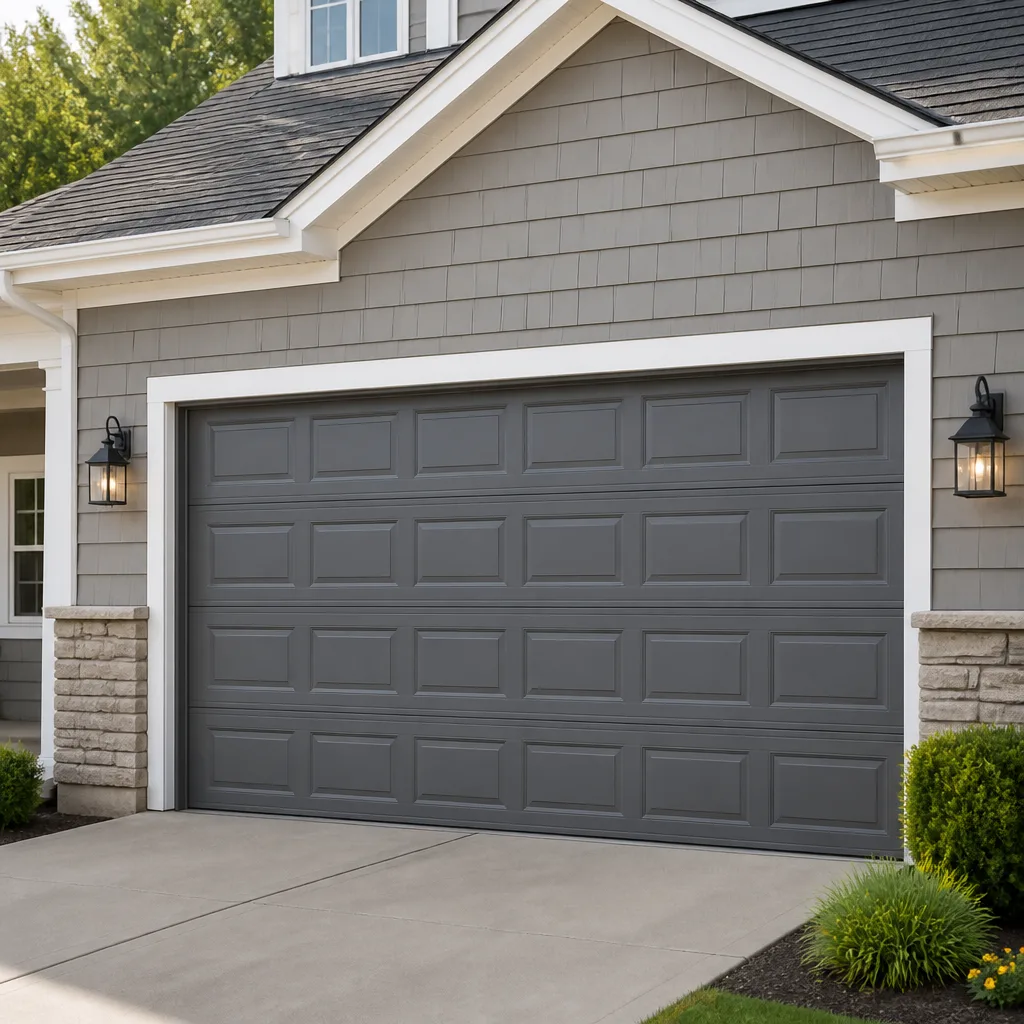
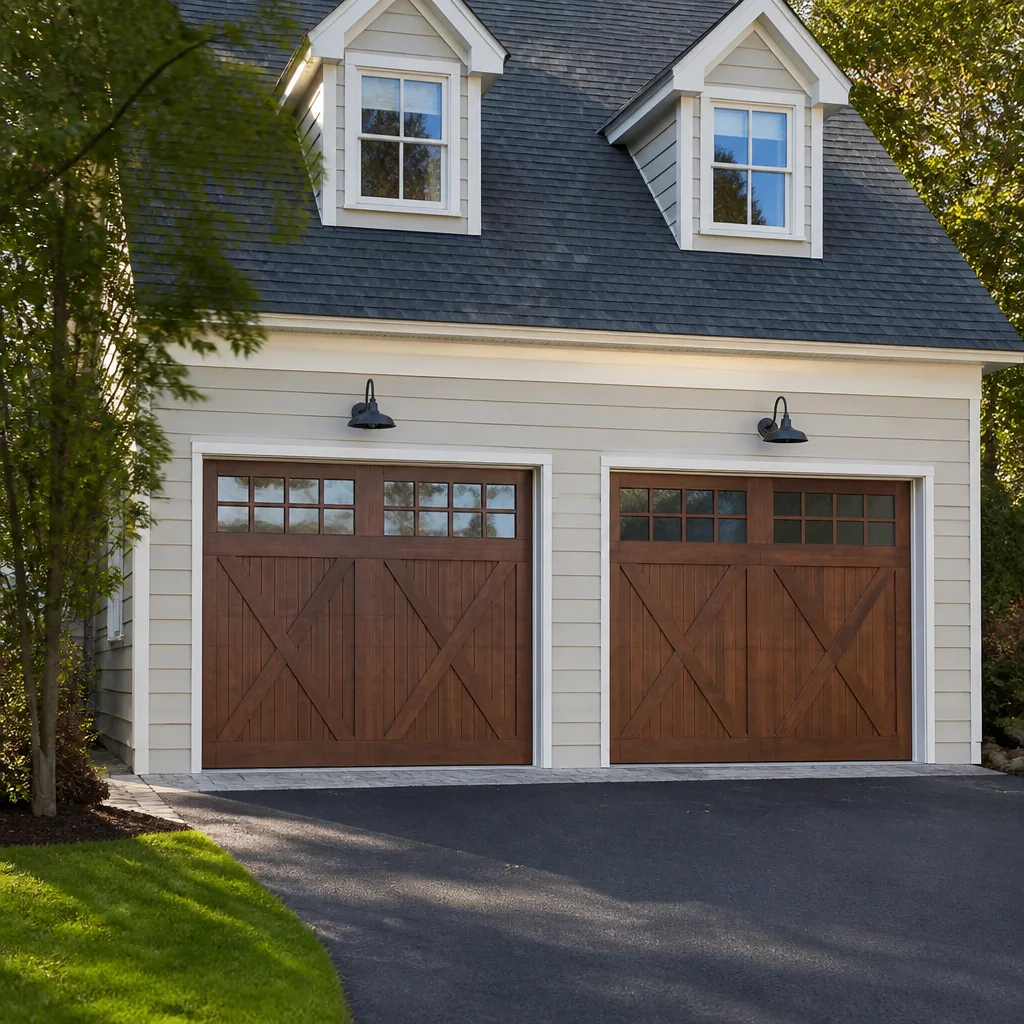
- Panel style. Several Schertz-area HOAs require a recessed panel or carriage-house design for homes on collector streets. Flat or ribbed panel designs may be rejected.
- Screening. If you want a screen on the garage opening, many HOAs require a specific retractable model and color match.
How to Check Before You Buy
- Pull your HOA’s architectural guidelines. They’re usually a PDF on the community management company’s website or in the closing binder from when you bought the house.
- Check for amendments. Architectural standards get revised. The 2022 amendment might override the 2018 guideline you’re reading.
- Take a drive. Look at 20 doors in your section of the neighborhood. If none of them have windows or none are painted a contrasting color, that’s the de facto rule even if the written covenant is vague.
- Submit before you order. A door is custom-made to your specifications. You can’t return it if the HOA rejects it. Get written approval first. Or have the installer confirm the covenant applies.
We’ve ordered doors for every major Schertz community. Part of getting it right is knowing which development’s board actually enforces and which one rubber-stamps everything. That’s local knowledge a national retailer doesn’t have and can’t fake.
Real Lifespans under Schertz Conditions
National manufacturers publish lifespan numbers based on average installation conditions across the country. A spring rated for 10,000 cycles is “10 to 12 years” in the brochure. A door is “15 to 20 years.” An opener is “10 to 15 years.” Those numbers assume a moderate climate and ideal installation. In Schertz, the numbers come in shorter, and here’s where they actually land.
Realistic Schertz Lifespans
- Torsion springs: 8 to 10 years on a standard 10,000-cycle spring for a two-car door used twice per car per day. High-cycle springs rated at 20,000 cycles stretch that to 12 to 14 years and are worth the small upcharge in this climate.
- Extension springs (older doors): 6 to 8 years. We replace these with torsion conversion regularly on 1990s-era Schertz homes.
- Cables: 8 to 12 years, but they often fail slightly after the spring fails, not before. Worn springs put uneven load on cables and eat into them.
- Rollers: 5 to 7 years for nylon-bushing steel rollers, 8 to 12 for sealed ball-bearing rollers. The humidity isn’t kind to plastic bearings.
- Openers: 6 to 10 years depending on brand and garage heat. LiftMaster and Chamberlain DC-motor units with metal gears last longest. Older AC-motor Genie units in hot garages fail earlier, typically at the capacitor or logic board.
- Panels on a steel door: 7 to 12 years before visible warping, rust, or fatigue cracks on west-facing installations. East-facing doors in shaded lots can go 15.
- Weatherstripping and bottom seal: 2 to 4 years in Schertz. UV and heat harden rubber fast. This is the cheapest maintenance item and the most commonly skipped one.
A door is 200 pounds riding on two springs. Respect it. Most Schertz homeowners never think about their garage door until the morning it won’t open and the car is inside. Knowing the real lifespan numbers means you can replace a spring on a Thursday instead of calling at nine at night when it snaps on a Saturday.
For garage door opener service in Schertz, we check the door balance before replacing any opener parts. If the opener is straining, the problem is almost never the opener. It’s the spring or the rollers underneath it.
What Garage Door Work Costs in Schertz
For a detailed garage door cost breakdown, prices in the Schertz market are honest now, and that’s coming from someone who quotes them every day. You can expect to pay between $180 and $340 for a standard torsion spring replacement on a two-car door, $110 to $190 for a cable replacement, $95 to $175 for a service call that includes track realignment or a roller replacement, and $950 to $2,800 for a new steel door installed depending on size, insulation, and window options. An opener replacement runs $350 to $650 installed for a belt-drive LiftMaster or Chamberlain.
Here’s the breakdown by job type:
Repair Price Ranges in Schertz
- Torsion spring replacement (single spring): $180 to $260
- Torsion spring replacement (pair): $260 to $340
- Extension spring conversion to torsion: $300 to $420
- Cable replacement (one side): $110 to $150
- Roller replacement (full set of 10 to 12): $120 to $180
- Track realignment: $100 to $160
- Sensor realignment or replacement: $90 to $140
- Opener logic board replacement: $180 to $280
- Full opener replacement (belt-drive, installed): $350 to $650
- Bottom seal replacement: $70 to $120
Installation Price Ranges in Schertz
- Basic single steel door (uninsulated, no windows): $950 to $1,500
- Insulated steel door (R-9, single car): $1,200 to $1,900
- Insulated steel door (R-12, double car): $1,800 to $2,800
- Wind-load rated double door: add $150 to $350
- Full frame replacement (wood rot repair): $300 to $800
Every quote we give in Schertz is written before work starts and the number doesn’t change when the truck shows up. If it’s not done right, we make it right, in writing, for 90 days. Call (830) 341-1180 for an exact quote on your door and we’ll tell you the price before you hang up.
Spring and Cable Safety: What You Need to Know
Torsion springs and lift cables are the two components on a garage door that carry enough tension to cause serious injury, and in Schertz we see both fail on a weekly basis. A torsion spring under full tension holds between 100 and 200 pounds of torque per spring. When it snaps, the released energy can fracture fingers, break jaws, or throw tools across a garage. Lift cables under load can slice through leather gloves like yarn.
Here’s what every Schertz homeowner should understand before touching anything on a garage door:
- Never remove a torsion spring, cable, or bottom bracket on your own. These are not DIY components. The winding and unwinding procedure requires specific tools and a specific sequence. Getting it wrong means the spring unloads on you.
- If you see a frayed cable, don’t wait. A frayed cable is a cable that has already started to fail. When it lets go, the door will drop on whatever is under it.
- If a spring snaps, don’t try to open the door with the opener. The opener will fight the unbalanced door and either strip its own gears or pull the door off its tracks.
- Keep a visual record. Every three months, look at the springs, cables, and rollers. Take a phone photo. Compare it to the last photo. Changes are easier to see side by side.
We count spring cycles the way you count tire miles. I will tell you what’s left on yours. If you hear a bang in the garage or see a gap in the spring above the door, call (830) 341-1180 before you touch anything. A live person answers, even at nine at night.
A Schertz-Specific Maintenance Calendar
Garage door maintenance is seasonal in Schertz, not just because of temperature but because of the specific failure points our climate creates. Here’s the schedule we recommend to every homeowner in the Schertz area, timed to the actual weather patterns we live with.
March (Pre-Humidity)
- Clean and inspect the door track. Winter dust and moisture leave residue that accelerates roller wear in the humid months ahead.
- Check the bottom seal. March is the last comfortable month to replace it before summer heat makes rubber brittle and hard to work with.
- Lubricate rollers, hinges, and springs with a garage-door-specific lubricant. Not WD-40. Use a silicone or lithium spray.
June (Peak Heat Begins)
- Test the auto-reverse function. Place a 2×4 flat on the floor under the door. The door should reverse within two seconds of contact. If it doesn’t, book a service call the same day.
- Check for panel warping. West-facing doors will start showing bowing by June. Catch it early and reinforce before cracks form.
- Listen to the opener. A straining opener in June is the door telling you the springs are losing tension, not that the opener is failing.
September (Post-Summer Rust Check)
- Inspect all hardware for surface rust. Hinges, roller stems, and bottom brackets. Surface rust in September becomes pitting by March.
- Re-lubricate. Summer heat breaks down lubricant quickly. A second application in September carries the door through winter.
- Check weatherstripping around the frame. When September humidity drops, cracked seals become visible. Replace before the first cold front.
December (Foundation Shift Check)
- Check for gaps at the top corners. Clay soil in Schertz expands and contracts through the year. December often shows the most movement, and a door that doesn’t seat evenly against the frame is a sign the slab has shifted.
- Test the balance. Disconnect the opener and lift the door manually. It should hold at halfway without falling or rising. If it falls, the springs are tired and should be replaced before they fail.
- Book an annual inspection. One visit a year catches most failures before they strand a car in the driveway on a school morning.
Most of this takes twenty minutes per season. However, the result is a door that lasts years longer in a climate that actively works against it.
Common Mistakes to Avoid
- Buying a door without checking the HOA covenant first. In Crossvine, Homestead, and Belmont Park, the architectural committees do enforce. A door ordered in the wrong color or panel style can’t be returned, and the HOA won’t waive the rule for your mistake.
- Replacing the opener when the door is out of balance. If the opener is straining, the problem is almost never the opener. A new opener on an unbalanced door burns out in two years.
- Ignoring a squeal or grind for weeks. Noise is the first symptom. A roller that squeals in May seizes in August. A spring that creaks on open is a spring with two months left, not two years.
- Choosing a door by R-value sticker alone on a west-facing Schertz garage. Orientation determines more than the core rating, and a door that faces the afternoon sun needs thermal breaks and weatherstripping, not just a higher number.
- Painting over rust without treating the metal. Rust on hinges and brackets in Schertz spreads under paint. The only fix is wire-brushing, rust converter, then paint, or better yet, replacing the hardware with galvanized.
- Skipping the bottom seal replacement because the door “still closes.” A worn bottom seal lets in dust, moisture, and every bug that lives in Texas. It’s a $70 to $120 fix that prevents hundreds in damage.
- Hiring by online price alone. A quoted price that comes from a call center three states away means nothing when the truck arrives and the number changes. The name on the van should be the name on the invoice and the name on the license.
When to Call a Professional
Call a professional the moment you hear a loud bang from the garage, see a visible gap in a torsion spring, notice a frayed cable, or find the door opening crooked or only on one side. These are not adjustment issues. They’re structural failures in progress. Also call before attempting any work on springs, cables, or bottom brackets. The risk is not worth the YouTube confidence.
Otto’s Garage Door offers free estimates in Schertz. Call (830) 341-1180 and you’ll talk to a person, not a phone tree. Often you’ll talk to Otto Reinhardt himself. He’ll quote the job on that call and hold the number when he gets there.
Frequently Asked Questions
A torsion spring replacement in Schertz typically runs $180 to $340 depending on spring size and whether both springs are replaced. We recommend replacing both when one fails, since they wear at the same rate. Call (830) 341-1180 for an exact quote over the phone.
Yes. We answer calls 24/7 and run emergency service for Schertz and surrounding areas. If your door is stuck closed with a car inside, tell us when you call and we’ll prioritize your stop. Same-day service is available for most spring, cable, and opener failures.
No. The price quoted on the phone is the price on the invoice. That’s not a marketing line. It’s how Otto has run this business since 2004. The only way a price changes is if you add work after we arrive, and you’ll approve any change in writing before a single tool comes out.
Yes. Our service trucks carry torsion and extension springs in standard Schertz sizes, cables, rollers, hinges, sensors, and most common opener parts. The majority of repairs are done in one visit. For door replacements and specialty orders, we’ll schedule a second visit once your custom door arrives.
We recommend Clopay and Raynor for steel doors in this climate, paired with LiftMaster or Chamberlain openers. Both door brands offer galvanized hardware options and wind-load rated models. The opener should be a belt-drive DC model with metal gears. A door is 200 pounds riding on two springs; the brand matters less than the spring gauge and the hardware spec.
Yes, always. Senior and Veteran 10% discount on every job, no expiration and no coupon required. We also offer $40 off any repair over $200 and a free second opinion on any written estimate, with no trip charge inside the county. Ask anyone on your street. We’ve been in this county since 2004.
The Bottom Line
A garage door in Schertz fails based on the street it faces, not the number in a national warranty book. Buy for west-facing sun, spring humidity, shifting clay, and real wind exposure. Check your HOA before you order. Replace springs before they snap, not after. Lubricate on a calendar, not when you remember. And when something does fail, call a local name you can verify: a published address, a license you can check, and the owner on the other end of the phone. That’s the difference between a handshake and a call center.
Ready to get your garage door fixed right? Call Otto’s Garage Door at (830) 341-1180 for a free estimate in Schertz. You’ll talk to a real person, get a written quote that doesn’t change, and join the long list of neighbors who’ve trusted Otto since 2004. Or visit the Otto’s Garage Door home page to see what we do and how we do it.
Written by Otto Reinhardt, Owner at Otto’s Garage Door, serving Schertz since 2004.