

Last updated September 11, 2026
Full 25-point door and opener safety check with every visit - springs, cables, rollers, tracks, and your LiftMaster or Chamberlain opener included
You get a price before we start. It does not change when the truck arrives.
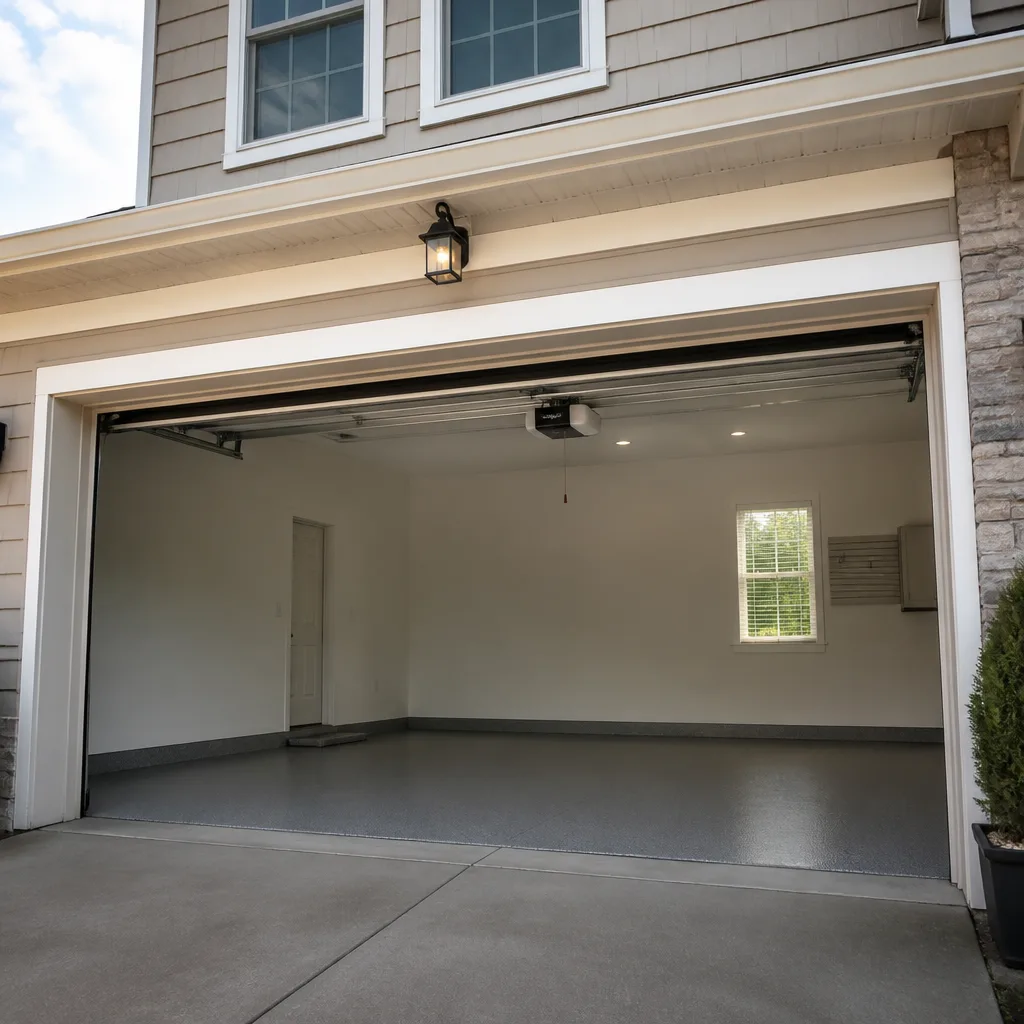
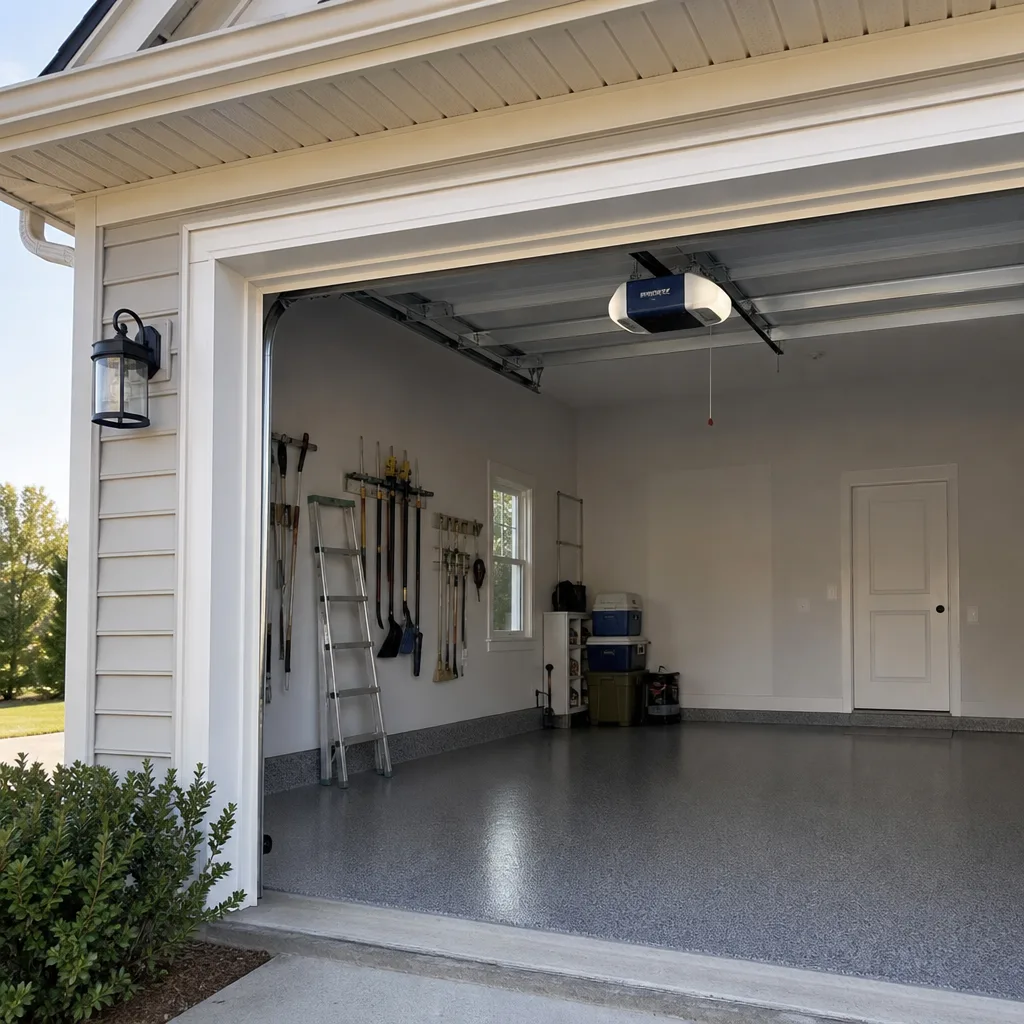
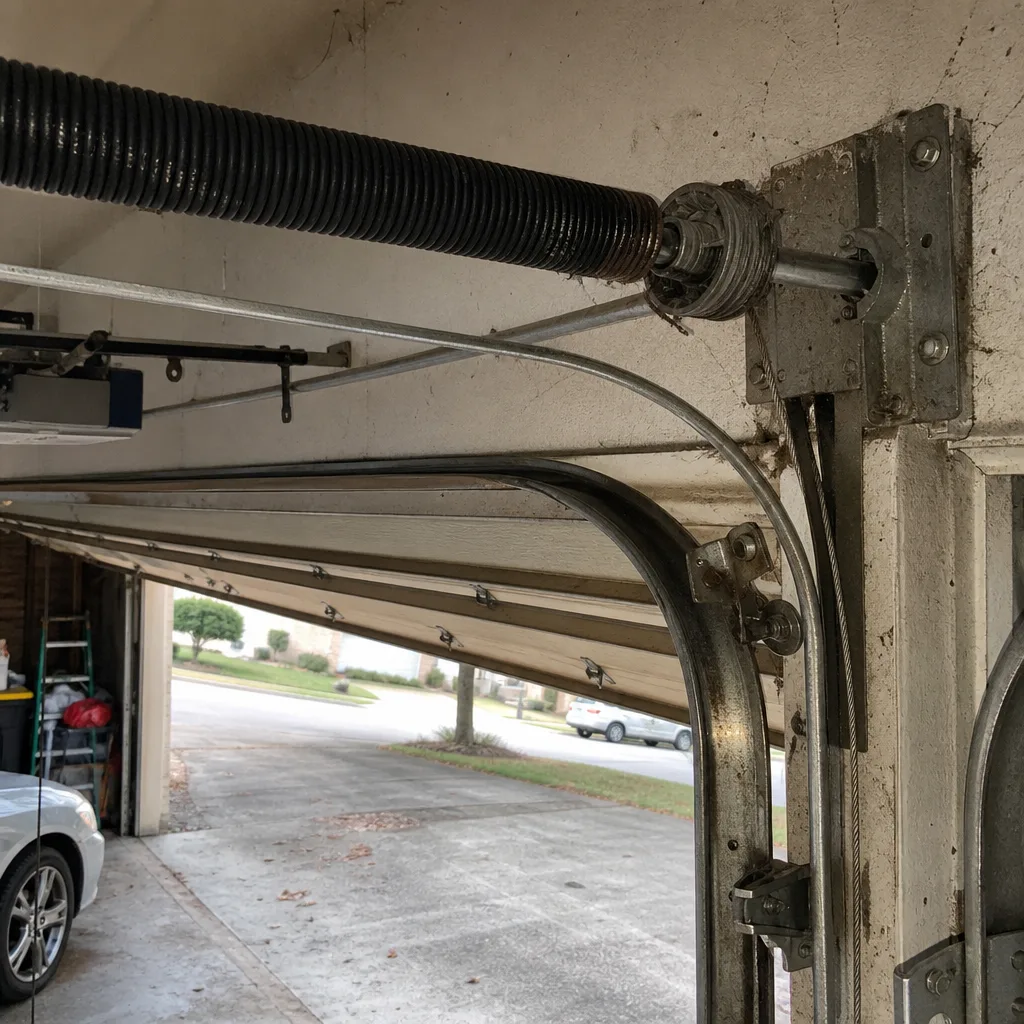 Before
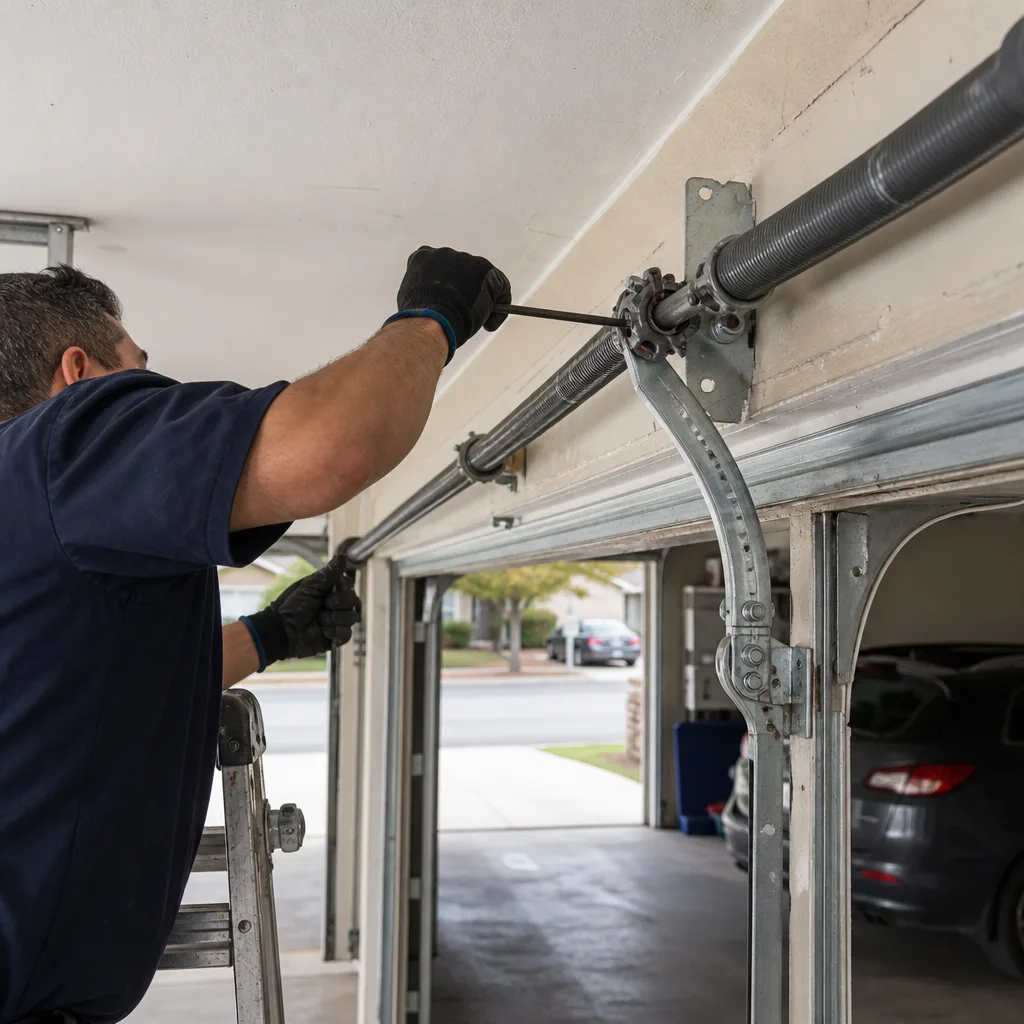 After
After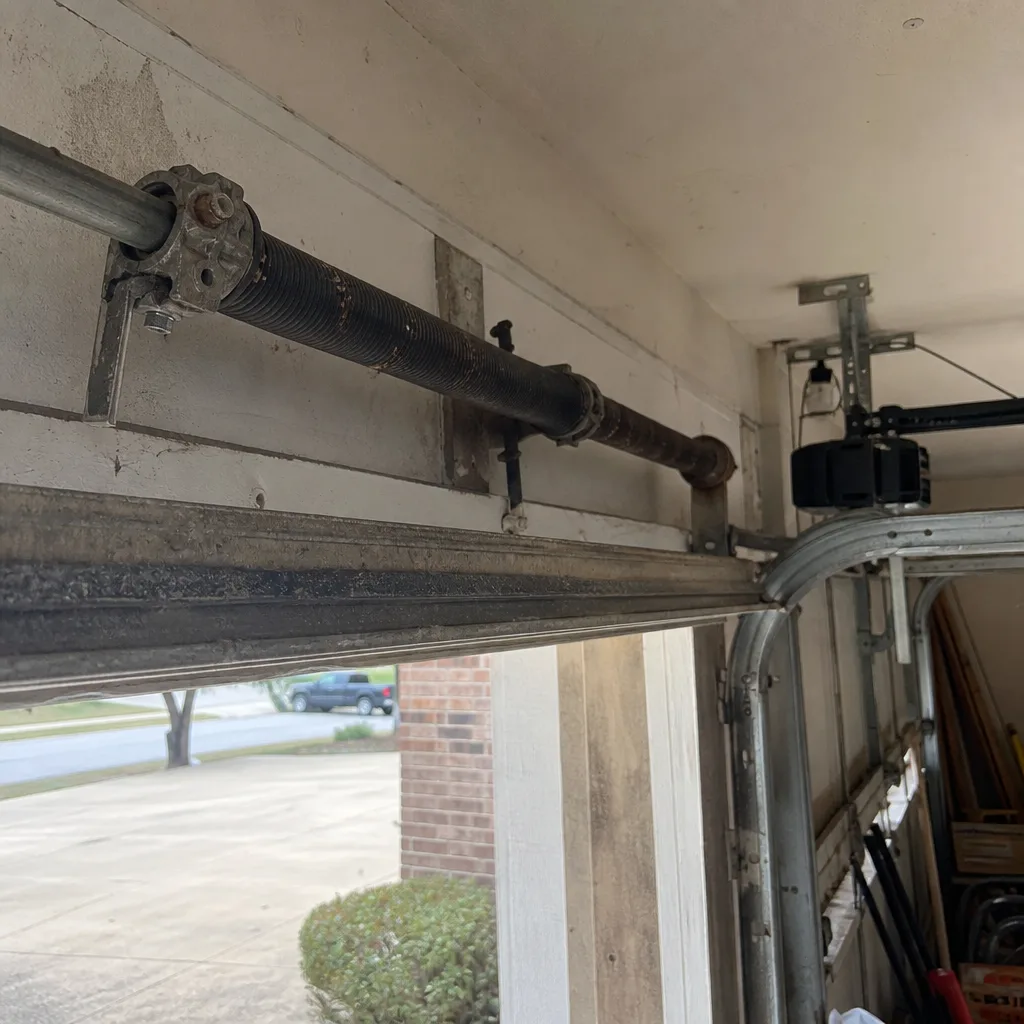 Before
 After
After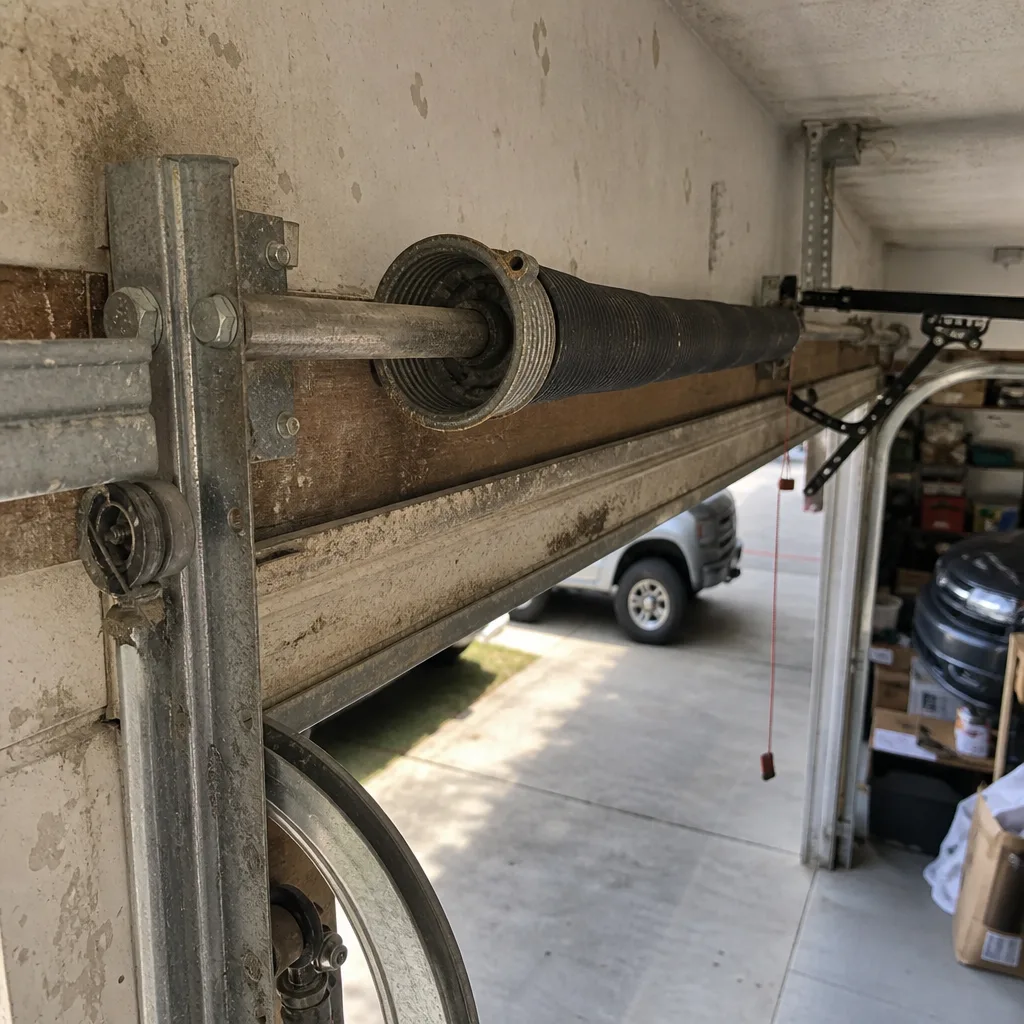 Before
 After
AfterGarage Door Warning Signs: A Schertz Homeowner’s Reference Guide
A garage door spring under full tension stores enough energy to put a person in the hospital. But here’s what most Schertz homeowners don’t realize: that same spring gives you a dozen warnings before it snaps. A creak at the same spot every morning. A door that pauses an inch before closing. A cable that looks fuzzy instead of smooth. This guide and our Complete Guide to Garage Door in Schertz translate those physical symptoms into plain language, with a clear answer for each one: monitor it, fix it soon, or stop using the door right now. By the time you finish reading, you’ll know more about your garage door than most people in Guadalupe County know about theirs.
Quick Answer
The most common garage door warning signs in Schertz TX fall into three categories: sounds (grinding, popping, squealing, banging), movement (slow operation, jerky motion, uneven lifting, reversing mid-close), and visual damage (frayed cables, rusted springs, misaligned tracks, sagging sections). A door that makes new noises, moves unevenly, or shows visible wear on cables or springs needs attention, and frayed cables or a gap in a torsion spring mean stop using the door immediately and call a professional.
Table of Contents
- The Sounds: What Your Door Is Trying to Tell You
- Movement Problems: Slow, Jerky, Uneven, or Wrong
- Visual Warning Signs: Cables, Springs, and Tracks
- The Summer Sticking Problem: What Heat Does to Your Door
- Is It the Opener or the Door? A Clear Test
- Signs That Are Fine vs. Signs That Mean Failure
- Common Mistakes to Avoid
- When to Call a Professional
- Frequently Asked Questions
The Sounds: What Your Door Is Trying to Tell You
Garage doors make noise. That’s normal. The question is whether the noise is new, getting worse, or happening at a specific point in the travel cycle. A door that has always creaked a little on humid mornings is different from a door that started grinding last week and gets louder every day. Here in Schertz, where summer temperatures routinely hit the high 90s and winter mornings dip into the 30s, metal expands and contracts enough to change the sounds your door makes. But some sounds are never normal, regardless of the weather.
The Grind: Rollers and Hinges Wearing Out
A grinding or scraping sound that follows the door as it moves usually points to worn rollers. Steel rollers have ball bearings inside that eventually dry out, seize up, or flatten from years of rolling against the track. When the bearings fail, the roller stops rolling and starts sliding, and metal-on-metal grinding is the result. This sound tends to get worse in cold weather because the lubricant has thickened and the metal has shrunk slightly, making everything tighter.
In our experience serving Schertz and the surrounding area since 2004, grinding rollers are one of the most common calls we get where the homeowner says “I just thought it needed oil.” Fixing it properly means replacing the rollers, not just spraying lubricant on them. A seized roller can gouge a track over time, and a track with a gouge in it will catch the roller on every pass. New nylon rollers with sealed bearings run quieter and don’t need the maintenance steel rollers do.
The Pop or Bang: Torsion Spring Failure in Progress
A loud pop or bang from above the door, typically right after the door starts moving, is the sound of a torsion spring snapping. This is not a warning sign. This is the failure. The warning signs came earlier: a door that felt heavier than it used to, a visible gap in the spring coil, or a creaking sound from the spring itself in the weeks before it broke.
But there’s a subtler popping sound that happens before the break. As a torsion spring ages through its rated cycle life, the metal develops micro-fractures. Each time the door operates, those fractures flex, and sometimes you’ll hear a faint pop or tick from the spring area. It’s easy to dismiss because it’s quiet compared to the door itself. If you hear a popping or ticking sound from the spring area that you didn’t hear six months ago, that’s a spring telling you it’s close to the end. Torsion springs are typically rated for 10,000 cycles, which works out to roughly 7 to 10 years for most homes in Schertz, as detailed in our Seasonal Garage Door Care for Schertz: Year-Round Homeowner’s Guide. If your springs are older than that, any new sound from the spring itself deserves a professional inspection. A door is 200 pounds riding on two springs. Respect it.
The Squeal: A Cable or Pulley Begging for Attention
A high-pitched squeal that happens only when the door is moving usually comes from the cable system. The cables run along pulleys at the bottom corners, and when those pulleys wear out or the cable starts rubbing against a misaligned part, you get a squeal. On extension spring systems (the springs that stretch along the horizontal track), the pulleys take a beating over time and the bearings inside them wear down. A squeal is often the first sign before the pulley seizes entirely, at which point the cable can jump the pulley and jam the door partway up.
If the squeal happens only when the door moves through one specific section of travel, that points to a localized problem: a roller, a hinge, or a spot on the track where the alignment is off. If it happens through the entire cycle, the problem is more systemic, often involving the pulleys or the spring system.
Movement Problems: Slow, Jerky, Uneven, or Wrong
A garage door that moves smoothly and evenly is a healthy door. A garage door that hesitates, jerks, sags, or moves at different speeds in different parts of the cycle is sending you a signal. The key is to watch the door without the opener, because many movement problems are masked by the opener’s force setting. When you release the emergency cord and run the door by hand, the true condition comes out.
The Hesitation: A Door Pausing at the Same Spot
If your door pauses or slows at the same point on every cycle, you’ve got a localized problem on one side of the track or in one hinge. The pause is the door hitting resistance: a roller sticking in a flat spot, a track section that’s out of alignment, or a hinge that’s binding. The door overcomes the resistance because the opener keeps pushing, but the pause is the door telling you something is wrong.
Run the door by hand and feel for the catch. If you can feel it but can’t see anything obvious, take a close look at each roller as it passes the problem area. A roller with a flat spot will visibly stumble. A track with a kink will slightly deflect the roller. The problem usually gets worse over time as the part wears more, so a hesitation you noticed last month will be more pronounced today if left alone.
The Uneven Lift: One Side Rising Before the Other
Stand a few feet back and watch the door as it opens. The bottom edge should stay level with the ground the entire way up. If one side rises before the other, or if the door visibly tilts at any point, that’s a serious imbalance. The most common causes are a cable that’s loose on one side, a broken spring (usually only one of two breaks, leaving the other to do all the work), or a drum that’s slipped on the shaft.
An uneven door is a door that’s asking the remaining components to do work they weren’t designed to do. One cable carries all the tension while the other hangs loose. The opener pushes against an unbalanced load, which shortens its lifespan significantly. This is a fix-it-soon situation at minimum, and if the unevenness is severe, it’s a stop-using-the-door situation. The risk is that the stressed cable snaps while the door is up, and then the entire weight of the door comes down on whatever is under it.
The Bounce-Back: Door Hits the Floor and Reverses
When a door touches the ground and immediately reverses back up, most homeowners assume the opener’s close-force setting needs to be turned up. Half the time they’re wrong. The door might be reversing because it’s hitting something: a piece of debris in the track, a broken hinge bolt stuck in the path, or a seal that’s become dislodged and blocks the door at the bottom.
Before you adjust anything on the opener, check the track and the floor area for obstructions. Run the door by hand and see if you feel resistance just before the bottom. If the door closes fine by hand but reverses when the opener runs it, the problem is in the opener’s limit settings or force adjustment. If it won’t close by hand without resistance, the problem is mechanical. The distinction matters because adjusting an opener to push harder against a mechanical obstruction is how doors get damaged and people get hurt.
Visual Warning Signs: Cables, Springs, and Tracks
You don’t need to be a mechanic to spot trouble on your own door. You just need to know what healthy looks like and what it doesn’t. Cables should be smooth and uniformly colored. Springs should be one continuous coil with no gaps. Tracks should be straight and parallel. Here’s what to look for in Schertz, where our climate creates specific wear patterns.
Cables: Fraying, Rust, and Loose Strands
Garage door cables are braided steel, and they give you ample warning before they fail. The first sign is usually fuzziness: individual strands start to separate from the main cable body, giving it a fuzzy appearance that you can spot from a few feet away. The next stage is visible fraying, where the separated strands stick out at odd angles. The final stage is a cable that’s noticeably thinner in one spot or has a kink in it where it runs over a pulley.
Rust on a cable is also serious. A light surface rust is normal on older doors, but deep rust that flakes off or creates visible pitting in the cable reduces its strength significantly. In Schertz, the combination of high summer humidity and winter temperature swings means cables rust faster on the outside surfaces than they would in a drier climate. A rusted or frayed cable is a stop-using-the-door-now situation. These cables are under full spring tension, and when they snap, the released tension can whip the cable in any direction. The door also loses its support on one side, which can jam the door in the track or drop it suddenly.
Torsion Springs: The Gap That Means It’s Already Broken
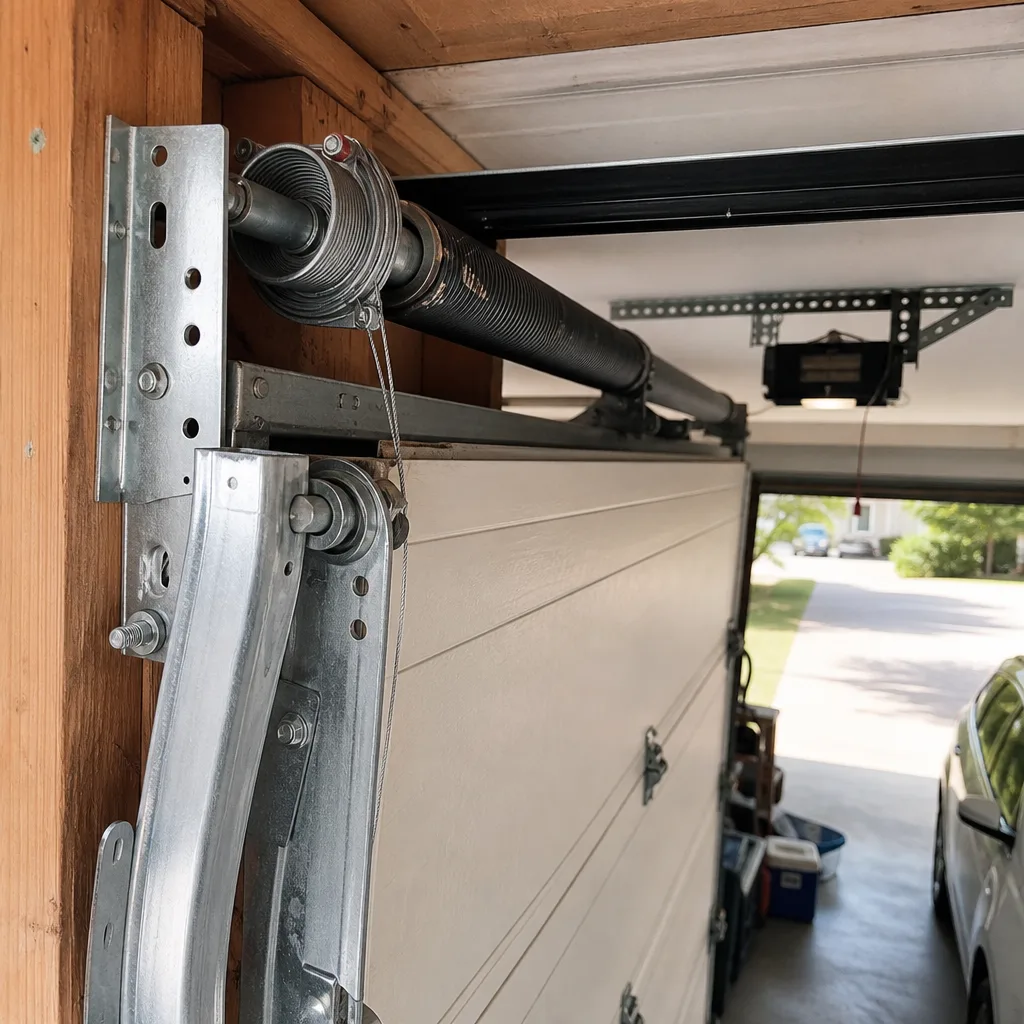
A torsion spring sits horizontally above the door opening. When it’s healthy, the spring is one continuous coil from end to end. When it breaks, you’ll see a visible gap in the coil, usually about two inches wide, where the spring has snapped clean through. If you see a gap in your torsion spring, the spring is already broken. There’s no fixing it; it needs to be replaced, and you should never attempt to do that yourself. The tension involved in winding a torsion spring is enough to break bones or worse.
Before a spring breaks, it gives warning if you know what to look for. A spring that’s near the end of its life will sometimes show a slightly stretched section, where the coils are spaced further apart than the rest of the spring. This is the metal beginning to yield. You might also see a thin line of rust at a point where the spring flexes, which is the metal work-hardening and starting to crack. Any of these signs on a spring that’s older than seven years means the spring is living on borrowed time. I count spring cycles the way you count tire miles. I will tell you what’s left on yours.
Track Alignment: The Gap Between Roller and Rail
Healthy tracks are parallel to each other and perpendicular to the ground. The roller should sit snugly inside the track with even clearance on both sides. When a track bends even slightly, the roller starts to ride up on one side of the rail, which wears the roller unevenly and gradually makes the problem worse.
Stand at the front of the door and sight down each track from top to bottom. If the track curves even slightly, if it’s noticeably wider at one point than another, or if the bolts holding it to the wall are loose, you’ve found the start of a problem. Loose bolts are the easiest thing to catch early: a track that’s worked loose on one mounting bracket will shift slightly with every cycle, and that movement compounds until the track is visibly out of line. Checking your track bolts once a year is ten minutes well spent.
Rollers: Chips, Flats, and Wobble
Watch your rollers as the door moves. A healthy roller spins freely and stays centered in the track. A failing roller will show one or more of these: visible chips or flat spots on the rolling surface, a wobble as it turns (which means the bearing is shot), or a side-to-side movement inside the track (which means the roller stem is worn). If one roller is visibly different from the others, replace it before it damages the track.
The Summer Sticking Problem: What Heat Does to Your Door
Here’s a pattern we see every year in Schertz, and most homeowners don’t connect the dots: the door only sticks in summer. It opens fine all winter, but starting around May, it binds at the same spot every afternoon. The homeowner assumes something is wrong with the opener because the problem is new. What’s actually happening is thermal expansion.
Steel tracks expand when they heat up. A door installed in the winter with the track bolts tightened to a comfortable tolerance will find those same tracks slightly longer and slightly bowed come August, when the garage interior can exceed 100 degrees. The track expands outward, which narrows the clearance between the roller and the rail, and the door starts to bind at the hottest part of the day. In the evening, when the metal cools and contracts, the door runs fine again.
The fix is usually a track adjustment, not an opener repair. The track brackets need to be loosened and the track re-aligned to give the necessary clearance for the summer expansion. If you ignore the sticking, the rollers wear faster against the tight spots, the hinges take extra load, and eventually the door wears a groove into the track that makes the problem permanent. A door that only sticks in summer is a door that’s asking for a ten-minute track adjustment before it becomes a roller, hinge, and track replacement.
The same principle applies in reverse on those occasional Schertz winter days when a cold front drops the temperature below freezing: metal parts contract, tolerances open up, and a door that was binding in July suddenly runs loose, which sometimes trips the opener’s safety reverse because it feels different than it did the day before. The door didn’t fix itself. The temperature changed, and the underlying problem is still there.
Is It the Opener or the Door? A Clear Test
If the opener is straining, the problem is almost never the opener. That’s the single most useful piece of information we can give a homeowner, because it saves people from replacing a $400 opener when the real problem is a $30 set of rollers or a $15 hinge. Openers are motors, and motors rarely fail slowly. They work until they don’t. If your opener is running, the motor is fine, and the problem is almost certainly the door it’s lifting.
Here’s the test that tells you which one is the problem:
- Release the emergency cord. This disconnects the door from the opener carriage. The cord hangs from the opener rail, usually red.
- Run the door by hand. If the door feels heavy, binds, catches, or refuses to open smoothly by hand, the problem is mechanical: springs, rollers, hinges, tracks, or cables.
- If the door moves smoothly by hand but jerks or strains when the opener runs it, the problem is in the opener: the gear, the logic board, the limit settings, or the drive mechanism.
- Run the door by hand halfway up and let go. A healthy, balanced door will stay roughly in place or drift very slowly. If it drops, the springs are not doing their job.
This test takes two minutes and tells you more than any video inspection ever will. You’ll also notice that many of the sounds we described earlier are easier to identify when the opener is disconnected, because the motor noise is gone and the mechanical sounds stand out clearly.
Signs That Are Fine vs. Signs That Mean Failure
Not every creak is a crisis. Homeowners who have been burned by a national company that quoted one price on the phone and billed another at the door tend to either overreact to every sound or ignore everything until it breaks spectactularly. Neither is right. Here’s the honest distinction based on what we see in Schertz garages every day.
Signs That Are Normal (Monitor, Don’t Fix)
- A light creak that has been there since the door was installed, especially if it only happens on humid mornings. This is usually two metal surfaces rubbing lightly, and it’s stable.
- Occasional squeak from a specific roller that goes away when the weather changes. If it’s intermittent and not getting worse, monitor it.
- Opener noise that varies with temperature. Belt and chain drives both sound different hot versus cold. Chain drives are naturally louder than belt drives.
- A door that’s slightly slower in cold weather. Grease thickens, metal contracts, and the opener works a little harder on cold mornings. This is normal in Schertz winters.
Signs That Look Minor But Mean Failure Is Coming (Fix Soon)
- A single fraying cable strand. One strand today means five next month. A cable that’s losing strands is losing strength, and it will fail completely at some point.
- A door that’s getting heavier to lift by hand. This means the springs are losing tension, which means they’re nearing the end of their cycle life. The door will get progressively heavier until something breaks.
- A hesitation at the same point on every cycle. It feels minor, but it’s a localized obstruction or wear point that’s slowly damaging the roller, hinge, or track at that spot.
- A gap in a torsion spring the width of a credit card. Springs should show no gap at all. Even a small gap means the spring has cracked and is holding on by the remaining coils.
- Loose track bolts on any mounting bracket. The bracket will wear its mounting holes, the track will shift, and the door will start binding. Tightening a loose bolt is a five-minute job. Replacing a damaged track is not.
Common Mistakes to Avoid
- Lubricating a failing roller instead of replacing it. A roller with flattened bearings won’t be fixed by spray lubricant. The lube masks the sound for a few days, and the homeowner thinks it’s fixed, while the roller continues to grind against the track and eventually damages it.
- Adjusting the opener’s force setting to fix a door that’s mechanically stuck. Turning up the close force on a door that’s hitting something makes the opener push harder against the obstruction. The obstruction usually wins, and something gets bent or broken.
- Painting over rusted tracks or cables. Paint doesn’t restore the structural integrity of rusted metal. It just hides the problem from view, which means the homeowner stops monitoring it, which means the failure comes as a surprise.
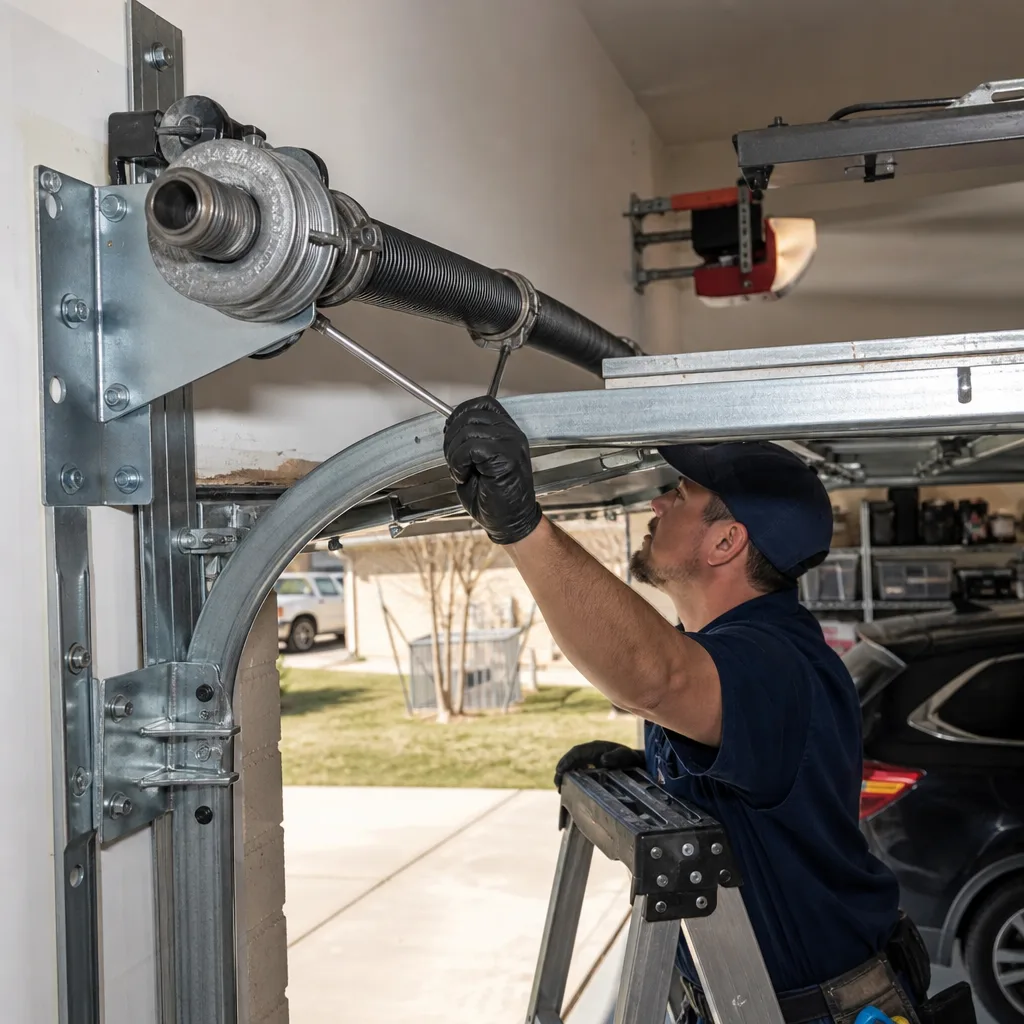
- Attempting to adjust torsion springs without a professional. Torsion springs store enough energy to break bones. This is not a DIY job, no matter how many YouTube videos you watch.
- Replacing the opener when the door is the problem. If the opener runs and the door doesn’t move properly, the opener is working. The problem is the door mechanism. Replacing the opener leaves the same mechanical problem, now attached to a new opener that will wear out early fighting the same battle.
- Ignoring a door that only acts up seasonally. In Schertz, summer heat causes track expansion that binds the door. If you wait until it’s bad enough to force the issue, you’ve likely damaged the rollers, hinges, or track beyond simple adjustment.
- Waiting for a frayed cable to snap before calling someone. A frayed cable under tension can fail at any moment, and when it does, the door can drop or jam violently. The repair bill for a cable that hasn’t snapped yet is far lower than the bill for a door that fell off its track.
When to Call a Professional
Some garage door problems are safely handled by a homeowner with basic tools. Replacing a remote battery, clearing debris from the track, tightening a loose bolt, and lubricating the moving parts are all legitimate DIY tasks. But the moment the problem involves a spring, a cable, or a door that’s come off its track, the job belongs to a professional. A door is 200 pounds riding on two springs. Respect it.
Here are the situations that warrant a professional inspection: any fraying or rusting on cables, any gap in a torsion spring, any door that feels heavy or uneven when run by hand, any door that has jumped its track, or any opener that’s making a grinding sound from the motor housing itself. For help choosing the right expert, see How to Hire a Garage Door Contractor in Schertz: A Step-by-Step Guide. Otto’s Garage Door offers free estimates in Schertz, with no trip charge inside the county. Call (830) 341-1180.
Frequently Asked Questions
The most commonly missed warning sign is a door that’s gradually getting heavier to lift by hand. Because most homeowners never release the emergency cord and run the door manually, they don’t notice the spring losing tension over months. By the time the opener’s strain becomes audible, the springs are already near the end of their life.
Garage door springs in Schertz typically last 7 to 10 years, depending on how often the door opens and closes. Standard springs are rated for about 10,000 cycles. A door that goes up and down four times a day will reach that limit in about 7 years. High-cycle springs can double or triple that lifespan. If your springs are approaching that age and you’re hearing new noises from the spring area, they’re likely ready for replacement.
No, a frayed cable should not be replaced by a homeowner. Cables carry the entire tension of the spring system, and removing or installing them without proper training is dangerous. The released tension can whip a cable with enough force to cause serious injury. This is a job for a professional with the right training and tools.
Summer sticking in Schertz is almost always caused by thermal expansion of the tracks. Steel tracks expand as the garage heats up, reducing the clearance between the roller and the rail. The door binds at the hottest part of the day and runs fine in the evening. The fix is a track re-alignment that accounts for the summer expansion, which a professional can do in a single visit.
Garage door repair in Schertz varies by job, but you should expect transparent, upfront pricing where the number quoted on the phone is the number on the invoice. Simple fixes like roller replacement or track adjustment typically land on the lower end, while spring replacement and cable replacement cost more because of the parts and the tension work involved. Avoid companies that quote a range and then bill the top of it. Otto’s Garage Door quotes the job on the call and holds the number when he gets there. Call (830) 341-1180 for an exact quote, and estimates are free.
It depends on the condition of the door panels. If the panels are structurally sound and the problems are mechanical (springs, cables, rollers, hinges), repair is usually the better value. If the panels themselves are rusted, dented, or warped, replacement is often the smarter long-term investment. A professional garage door installation in Schertz can give you another 20-plus years of service. Otto will give you an honest answer either way, because he’d rather keep a customer for twenty years than win one big ticket.
The Bottom Line
A garage door tells you what’s wrong long before it breaks. The sounds, the way it moves, and the visible condition of its cables, springs, and tracks are all signals you can learn to read in an afternoon. In Schertz, where seasonal temperature swings put specific stress on doors, paying attention to those signals prevents the 9 PM spring failure that traps your vehicle in the garage. Check your door by hand once a season, watch for frayed cables and spring gaps, and never ignore a door that’s getting heavier. You’ll find more guides & resources on our blog to keep your door running smoothly year-round. When something doesn’t feel right, call a name you can verify. Ask anyone on your street. We have been in this county since 2004, and Otto is a palindrome: reads the same from either end, same as the door.
For more on how Otto’s Garage Door works, visit the Otto’s Garage Door home page, or read about garage door repair in Schertz and garage door opener service in Schertz.
Written by Otto Reinhardt, Owner at Otto’s Garage Door, serving Schertz since 2004.