

Last updated September 11, 2026
Full 25-point door and opener safety check with every visit - springs, cables, rollers, tracks, and your LiftMaster or Chamberlain opener included
You get a price before we start. It does not change when the truck arrives.
 Before
 After
After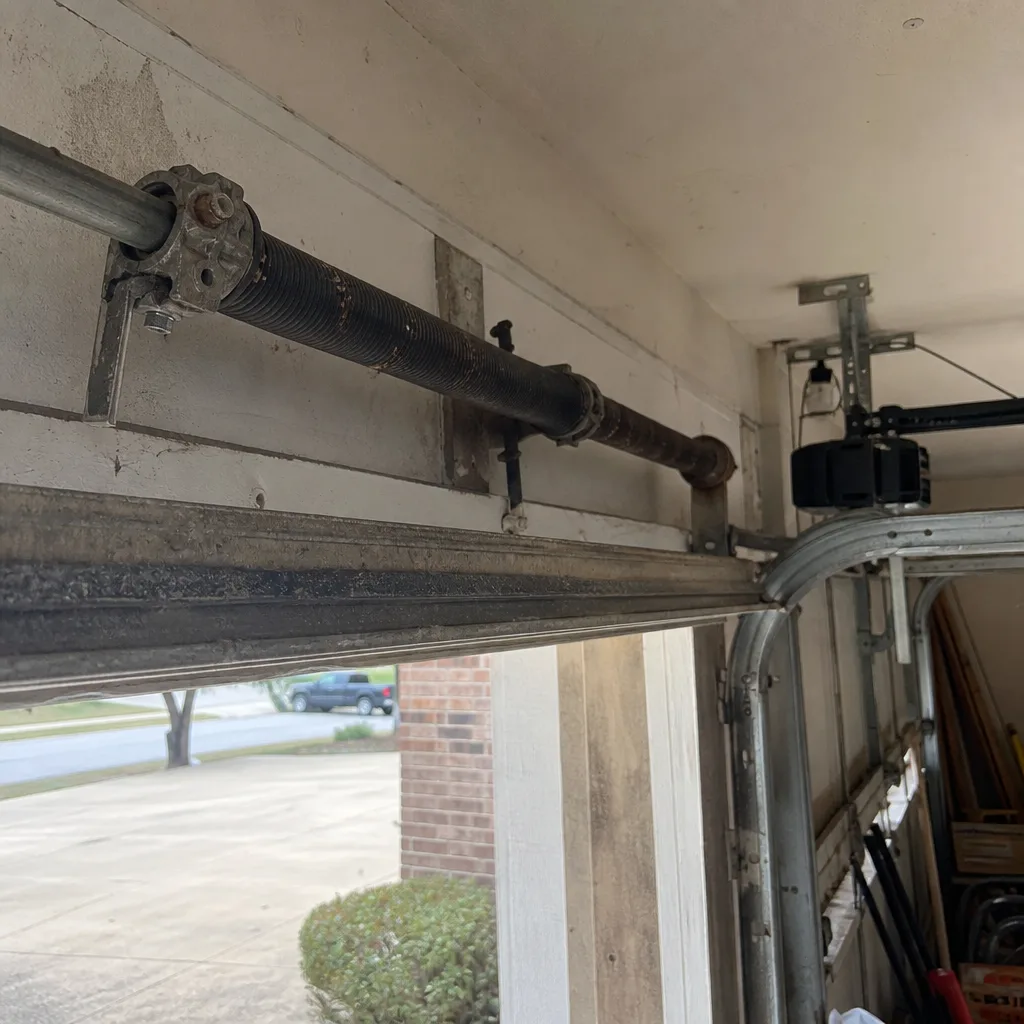 Before
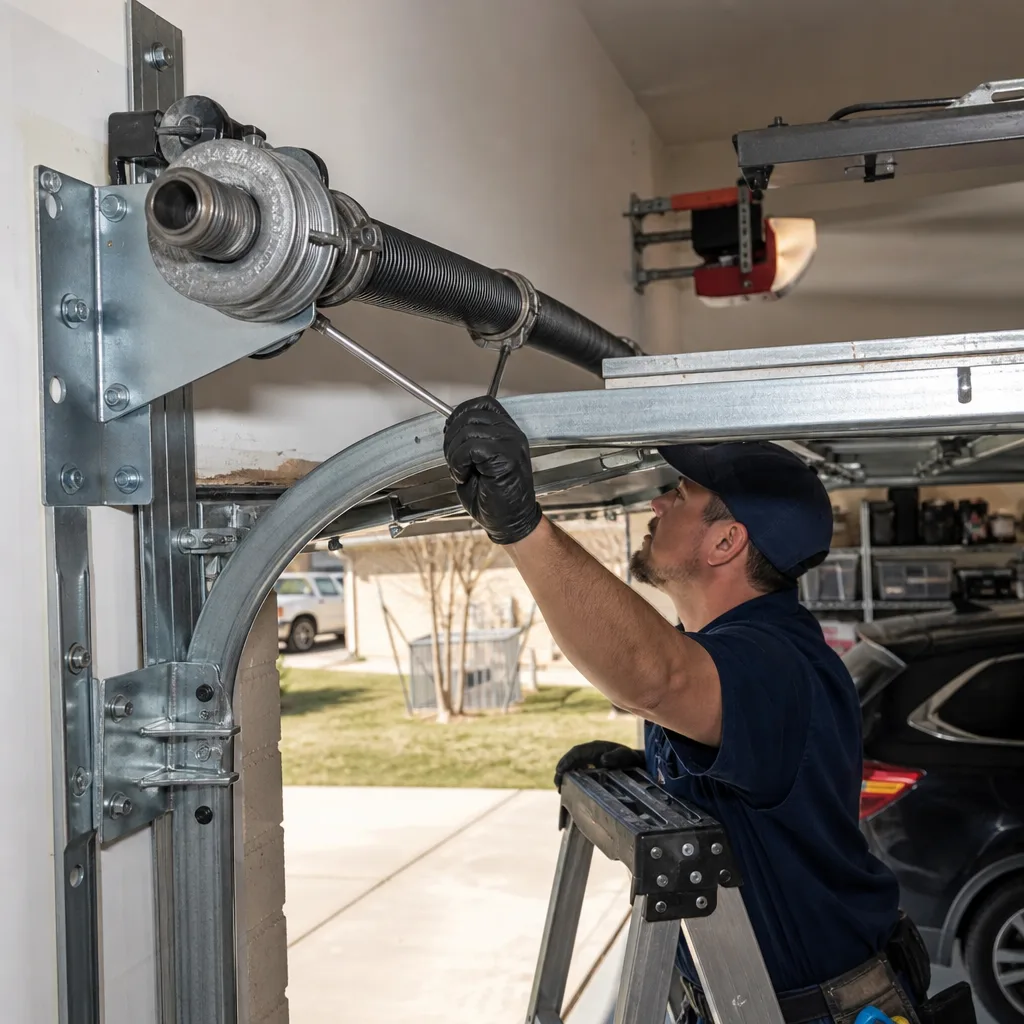 After
After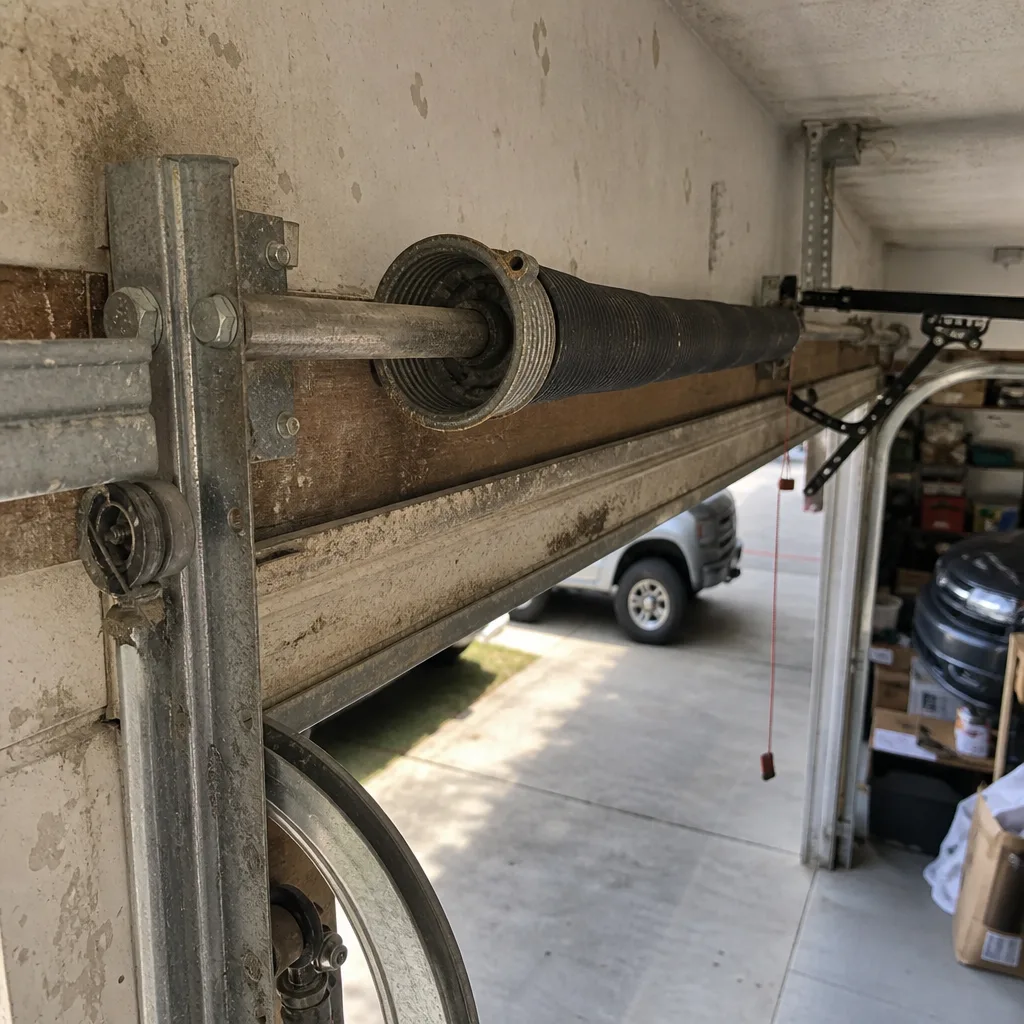 Before
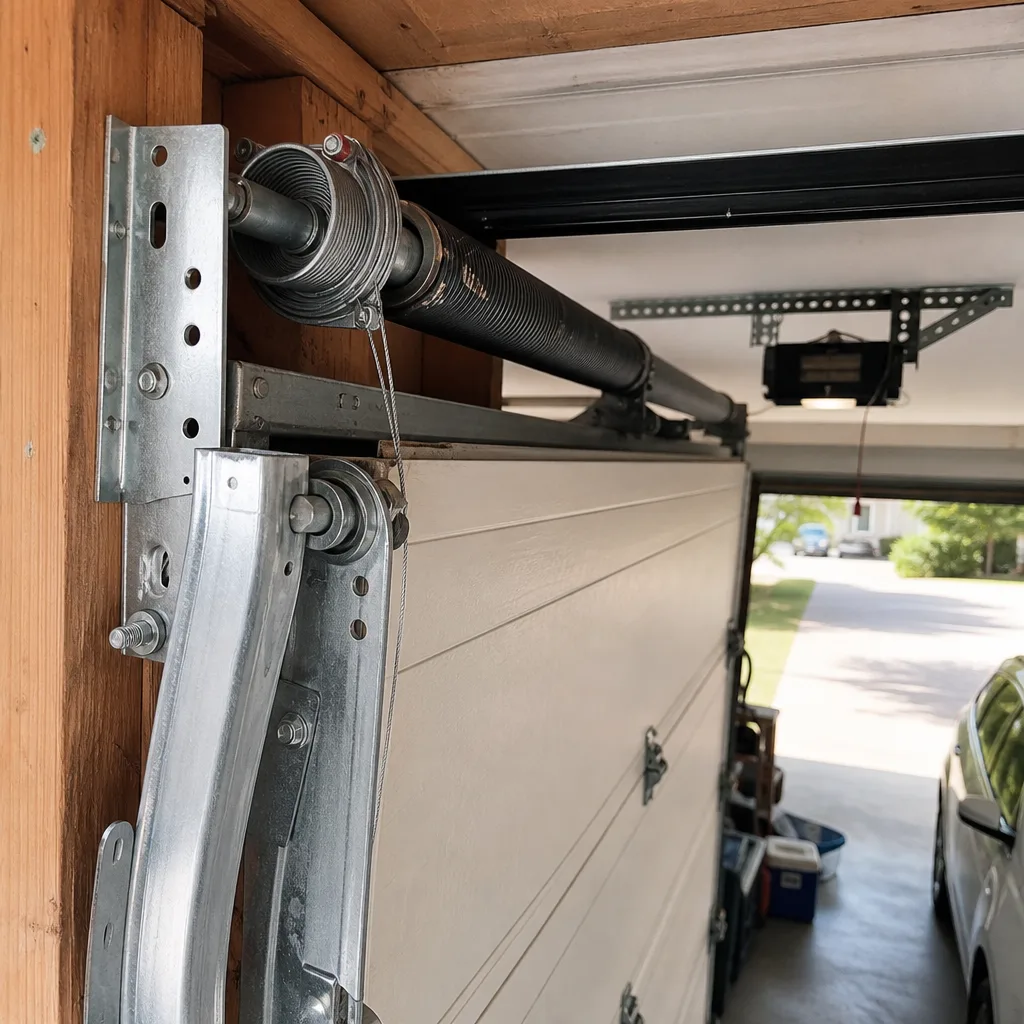 After
AfterGarage Door Repair Maintenance Checklist for Schertz Homeowners
A garage door has more moving parts under tension than your truck’s suspension, and most Schertz homeowners won’t touch it until it fails at 6 a.m. on a workday. Fifteen minutes twice a year changes that math entirely. The door that gets a quick inspection and a shot of lubricant in the right places will outlast the door that gets ignored by a matter of years, not months. This checklist is the one we actually run when we’re out on our Garage Door Repair services across Schertz, and it’s built around what this climate does to hardware over twelve months, not a generic template copied from a national website.
Quick Answer
A garage door maintenance checklist for Schertz homeowners comes down to six tasks done twice a year: lubricate the five hinge points and spring coils with white lithium grease, test the spring balance by releasing the opener and lifting the door manually, check the auto-reverse safety sensors by blocking the beam, inspect the bottom seal for cracking after summer heat and flood rains, tighten every bolt and lag screw, and listen for grinding or popping that means a spring is near the end of its life. The whole routine takes under twenty minutes and costs less than fifteen dollars in materials. Do it in late April before the heat arrives and again in late October after storm season winds down.
Table of Contents
- The Month-by-Month Maintenance Calendar for Schertz
- The Lubrication Debate Settled: What Goes Where and What Never To Do
- The Balance Test: What Your Arm Is Actually Telling You
- The Force-Resistance Test and What the Numbers Mean
- The Bottom Seal: The One Item That Protects Your Home’s Interior
- Audio Cues: Grinding vs. Squealing vs. Popping
- Common Mistakes to Avoid
- When to Call a Professional
- Frequently Asked Questions
- The Bottom Line
The Month-by-Month Maintenance Calendar for Schertz
The generic advice every national website repeats is “inspect your door in spring and fall.” That’s not wrong, but it misses what actually happens to garage door hardware in Guadalupe County. Schertz doesn’t get four gentle seasons. We get a long stretch of dry heat that bakes lubricant out of the hinges, a storm season that slams doors with wind-driven rain and humidity, and a handful of winter nights cold enough to make metal contract and brittle parts snap. Here’s the calendar that matches reality on the ground here:
Late April: The Pre-Summer Service
This is the most important maintenance window of the year in Schertz. Before the hundred-degree days start stacking up, you want fresh lubricant in every hinge and roller because summer heat will cook whatever you apply right out. Check the spring coils for rust, which accelerates fast in humid summer air. Tighten the lag screws that hold the track brackets to the wall, because dry heat makes wood framing contract slightly and screws loosen. Run the balance test now, before the heat makes everything more brittle.
June through August: The Peak-Heat Check
You’re not doing full maintenance here. You’re doing a thirty-second listen and look every month. When you open the door in the morning, stand next to it and listen. A hot door that has lost lubricant will start to squeal, and that’s your warning to reapply before the rollers wear flat spots. Check the bottom seal visually for signs it’s pulling away from the door edge; prolonged exposure to direct afternoon sun on a west-facing door will soften the rubber and let it sag. If the door is west-facing in Schertz, expect to replace that seal more often than your neighbor whose door faces east.
Late October: The Post-Storm-Season Service
After the last of the big fall thunderstorms has blown through, you want to get under the door and look at the bottom seal and the track. Storm runoff and standing water at the base of the door will accelerate rust on the bottom panel and the lower rollers. Wipe down the tracks with a dry rag and check for rust blooms. Run the auto-reverse test on the opener, because moisture in the sensor wiring can cause intermittent failures. This is the time to address any rust before winter makes metal more prone to cracking.
December through February: The Cold-Snap Check
Schertz cold snaps are short but real, and metal contracts when the temperature drops below forty. The most common cold-weather failure we see is a torsion spring that has been rusted and weakened all year finally letting go on a twenty-degree morning. The check here is simple: on the first cold morning of the year, open the door and listen for the spring. A healthy spring makes a smooth, even sound. A weak spring makes a creaking or groaning noise as the coils shift. If you hear that, call before it snaps, because it always snaps at the worst time. The rest of the year you can think of maintenance seasonally. Cold snaps demand a quick listen.
The Lubrication Debate Settled: What Goes Where and What Never To Do
Every maintenance checklist on the internet tells you to “lubricate moving parts.” Almost none of them tell you which lubricant goes on which part, and that’s where most do-it-yourself damage starts. The wrong lubricant on a garage door attracts dust, gums up, or degrades rubber, and then you have a bigger problem than the one you were preventing. Here’s the breakdown we use on every door we service in Schertz, and it’s the same advice Otto gives when someone asks at the hardware store counter.
White Lithium Grease: Hinges and Springs Only
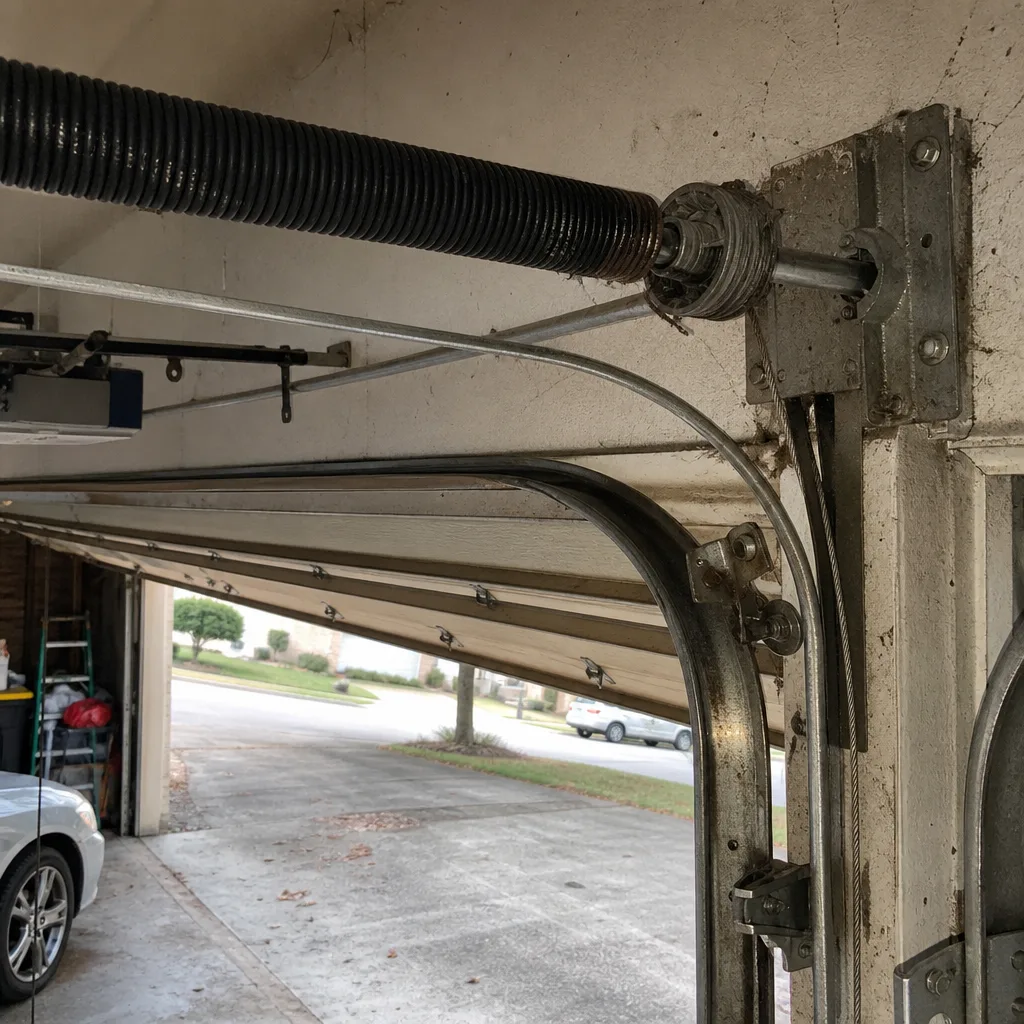
White lithium goes on the five hinge points on each side of the door, the torsion spring coils above the door, and the extension spring coils if you have an older two-spring system. It stays in place, won’t drip, and doesn’t attract dust the way penetrating oil does. Apply a thin coat, not a glob. You’re not greasing a wheel bearing; you’re putting a film between two metal surfaces that rub against each other. Too much lithium grease just creates a dust-catching mess that turns to paste in the Schertz summer.
Silicone Spray: Rollers and Weatherstripping
Silicone spray is the right choice for the rollers, especially if you have nylon-rimmed rollers rather than all-steel. It lubricates without degrading the nylon, and it’s safe for the rubber weatherstripping around the door frame. Spray the roller stems where they enter the hinge, and wipe off the excess. A quick shot of silicone on the weatherstripping twice a year keeps the rubber supple and helps it seal against the door in both heat and cold.
What You Should Never Do
Never spray WD-40 or any penetrating oil on your garage door hinges or rollers. It’s a solvent, not a lubricant, and it strips away whatever protective film is already there. Never lubricate the tracks. The rollers run inside the track on bearings, and lubricating the track itself just makes a sticky mess that collects dust and grit. And never get any petroleum-based lubricant on a rubber bottom seal; it will break down the rubber and leave you with cracks that let water and bugs through. If you only remember one rule from this whole guide, make it this one: white lithium on metal-on-metal, silicone on rubber and nylon, nothing at all on the tracks.
The Balance Test: What Your Arm Is Actually Telling You
The balance test is the single most useful diagnostic a homeowner can run, and it takes sixty seconds. It tells you whether your springs are doing their job or whether your opener motor is quietly burning itself out doing the springs’ work for them. In Schertz, where doors see hundred-plus temperature swings across the year, springs lose tension gradually, and a door that’s slightly out of balance in March can be badly out of balance by September if you don’t catch it.
Here’s how to run the test the way we run it on service calls:
- Close the door completely.
- Pull the red emergency release handle on the opener to disconnect the door from the motor.
- Lift the door manually to about waist height and let go.
- Watch what happens.
A healthy, properly balanced door will stay at waist height or drift very slowly up or down. If the door drifts down, the springs are weak or losing tension. If it shoots up, the springs are over-tensioned, which is less common but still hard on the hardware. Either way, you’re now asking your opener motor to compensate for the imbalance, which shortens the motor’s life and burns more electricity. We replace far more opener motors in Schertz than we should because springs that were never re-tensioned quietly killed them.
The second part of the balance test is visual. With the door at waist height, look at the gap between the door sections and the track on both sides. If one side of the door hangs lower than the other, you’ve got a cable problem, not a spring problem, and that’s a call-right-now situation. A door that’s off level puts uneven load on one spring and one cable, and that’s how doors come off their tracks.
The Force-Resistance Test and What the Numbers Mean
Your opener has two adjustable settings: the up force and the down force. They control how much resistance the motor pushes against before it reverses or stops, and they’re the safety net that keeps the door from crushing whatever is underneath it. Modern openers made by LiftMaster, Chamberlain, and Genie have force settings that adjust automatically, but that auto-adjustment drifts over time as the door gains weight from humidity absorption in the panels and loses spring tension. Testing it twice a year is a requirement, not a suggestion.
The force-resistance test is prescribed by federal safety standards that every opener manufacturer has followed since 1993. It works like this:
- Place a two-inch-thick piece of wood flat on the floor directly under the path of the door.
- Close the door using the opener.
- The door should reverse within two seconds of hitting the wood.
If the door doesn’t reverse before crushing the wood, your down force is set too high. That’s not just a maintenance issue; it’s a safety hazard, because whatever is under the door when it closes is at risk. Kids and pets are exactly the right height to end up under a closing door, and a misadjusted force setting is the difference between the door reversing and the door not stopping. This test is non-negotiable, and we run it on every service call in Schertz even if the customer only called us out for a broken spring.
The second test is the photoelectric sensor test. With the door open, press the close button and pass your foot through the invisible beam that runs between the two sensors mounted near the floor on both sides of the door opening. The door should reverse immediately. If it doesn’t, either the sensors are misaligned, the wiring is damaged, or the sensors themselves have failed. In Schertz, where humidity and occasional flooding can corrode sensor wiring connections, this is one of the most common opener failures we see.
The Bottom Seal: The One Item That Protects Your Home’s Interior
The bottom seal, also called the astragal, is the rubber strip that runs along the bottom edge of the door. It’s the only thing standing between your garage floor and whatever the Texas weather is throwing at it, and it’s the maintenance item that directly affects your home’s interior moisture and pest entry in ways most homeowners never connect to the garage door.
Here’s the scenario we see repeatedly in Schertz neighborhoods after a heavy fall rain. The storm dumps two inches in an hour, the water pools against the garage slab because the lot grading runs toward the house, and a cracked or sagging bottom seal lets an inch of water inside. That water soaks into drywall, wicks up into stored boxes, and creates the damp environment that attracts roaches, silverfish, and rodents. The garage smells musty for weeks, and the homeowner never realizes the garage door seal was the entry point.
The check is simple. Stand inside the garage with the door closed and look for daylight under the door. Any gap you can see is a gap that lets water, dirt, and bugs in. Then run your hand along the seal itself, feeling for cracks, brittleness, and flat spots where the rubber has compressed and lost its shape. Pay extra attention to the corners, where the seal meets the concrete and takes the most compression damage. In Schertz, direct afternoon sun on a west-facing door will harden the rubber faster than anything else, and a summer of hundred-degree days will crack a seal that was soft in the spring.
Replacement is a thirty-minute job and a new seal costs less than forty dollars for most doors. It’s the highest-value maintenance item on this list in terms of what it protects versus what it costs. When we install a new seal on a Schertz home, we always check the concrete at the same time, because a settled slab that has created a low spot will defeat a new seal just as fast as a cracked one did.
Audio Cues: Grinding vs. Squealing vs. Popping
Your garage door talks to you every time you open and close it, and the sounds it makes are the earliest warning system you have. Most homeowners in Schertz tell us they didn’t know anything was wrong until the door stopped working, but when we ask what it sounded like in the weeks before, they describe the exact same noises we cover in our Garage Door Warning Signs: A Schertz Homeowner’s Reference Guide. Here’s what each sound means and how urgent it is.
Squealing
A high-pitched squeal when the door moves is almost always a dry roller or a dry hinge. It’s the least serious sound on this list, but it’s not harmless. Metal-on-metal contact without lubrication wears flat spots onto the roller bearings, and a flat-spotted roller doesn’t roll, it slides, which drags the door and stresses the opener. Squealing is a maintenance problem you can fix in ten minutes with a shot of white lithium on the hinges and silicone on the rollers. If the squeal stays after lubricating, you’ve got a roller that’s already worn out and needs replacing.
Grinding
A grinding noise is different from a squeal. It’s lower, rougher, and sounds like metal being dragged across concrete. Grinding usually means the rollers are running on worn-out bearings, the track is out of alignment and the roller is scraping against it, or the opener’s drive gear is wearing down. Grinding is a weeks-away problem, not a months-away problem, because the wear accelerates once metal starts contacting metal. If you hear grinding, stop using the door daily and get someone under it within a week or two. We’ve seen doors go from grinding to off-the-track in less than a month in Schertz, and the repair bill goes from under a hundred dollars to several hundred when that happens.
Popping or Banging
A loud pop when the door moves, especially when the springs are near full tension, is the sound of a spring coil shifting on the shaft or a cable letting go a fraction of an inch. It is a call-right-now sound, because a spring that pops regularly is a spring that’s about to snap, and a garage door spring carries enough tension to cause serious injury if it breaks while you’re standing under it. I count spring cycles the way you count tire miles, and a popping spring has a very low cycle count left on it.
The one sound people misread is a rhythmic clunking as the door moves. That’s not the spring, and it’s not the opener. It’s usually a broken roller or a bent track section, and while it’s less dangerous than a popping spring, it’s still a problem that gets worse every time the door moves. Clunking means a roller has failed and the door is riding metal-on-metal through that section of track.
Most of what we know about garage door repair in Schertz comes from doors that gave plenty of warning sounds before they failed, and homeowners who didn’t know what the sounds meant until it was too late to fix the small problem.
Common Mistakes to Avoid
- Lubricating the tracks. The tracks are not a moving part, and lubricant on them just collects dirt and creates a sticky, abrasive paste. The only thing that goes on the tracks is a dry rag to wipe off debris.
- Using WD-40 on hinges and springs. Penetrating oil is a solvent, not a lubricant, and it strips away protective coating while providing almost no lasting lubrication. White lithium is what you want on metal friction points.
- Ignoring the balance test because the door still opens. A door out of balance will work right up until the opener motor burns out or a spring snaps. The balance test catches the problem months before either failure happens.
- Skipping the auto-reverse test after storm season in Schertz. Humidity and flooding corrode sensor wiring, and a sensor failure means the door won’t reverse when it should. Test it twice a year, no exceptions.
- Replacing the opener before checking the springs. If the opener is straining, the problem is almost never the opener. Weak springs make the motor work harder, and replacing the motor without addressing the springs means you’ll be replacing the motor again in two years.
- Thinking a quiet door is a healthy door. Silence just means you’re not hearing the problem yet. A spring losing tension doesn’t make noise until it’s near the end. That’s why the physical tests matter more than the audio cues.
- Waiting until the door fails to call anyone. Every door that fails on a Monday morning in Schertz was warning the homeowner for weeks beforehand. When the warning sounds show up, the repair is cheaper and the appointment is your choice rather than an emergency.
When to Call a Professional
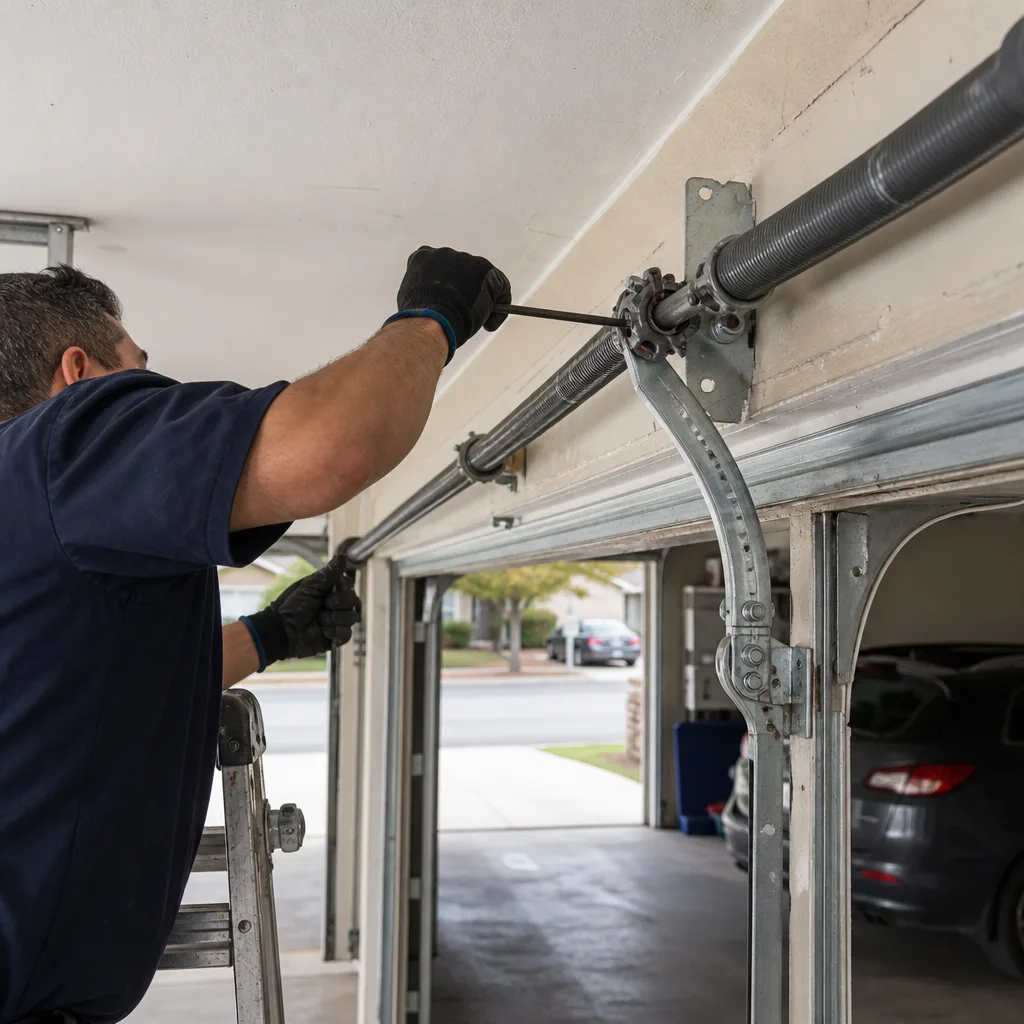
Any work involving the torsion springs above the door is a professional-only job. The spring is under hundreds of pounds of tension even when the door is closed, and a spring that lets go while you’re working on it can cause serious injury. Cables are the same story; a snapped cable under load is a projectile. Beyond the safety-critical items, call a professional when the door is off-level, when the balance test shows significant drift, when the auto-reverse test fails after you’ve cleaned and realigned the sensors, or when you hear popping that indicates a spring is near failure. Otto’s Garage Door offers free estimates in Schertz; call (830) 341-1180 and the person who answers will quote the job on the phone and hold that price at the door.
Frequently Asked Questions
Twice a year, in late April and late October, matching Schertz’s pre-summer heat and post-storm-season windows. The summer heat bakes lubricant out of hinges faster than in milder climates, so the April application is the more important of the two.
White lithium grease goes on the hinge points and spring coils; silicone spray goes on the rollers and weatherstripping. Never use WD-40 or any penetrating oil, and never lubricate the tracks.
A door that reverses on contact with the floor has the down force set too low or the close limit set incorrectly, and the opener is misreading the floor as an obstruction. Adjusting the force and limit settings is a quick fix for a technician, and we do it on standard service calls.
Standard torsion springs are rated for ten thousand cycles, which translates to roughly seven to ten years for a door opened twice a day. The heat and humidity in Schertz can shorten that lifespan by accelerating rust, which weakens the spring coils and causes early failure, so we recommend having springs inspected annually after the five-year mark.
Yes, on most doors the bottom seal slides out and the replacement slides in, and the part costs under forty dollars. The caveat is that a settled concrete slab or an out-of-level door will wear a new seal out quickly, so check the foundation and the door level at the same time. If the seal replacement is paired with a door that’s been through a Schertz flood season, a professional check of the track and rollers is worth the trip charge.
A loud bang when the door closes usually means the springs are shifting on the shaft or a cable has slipped, and it’s a warning sign of imminent spring failure. Stop using the door until it’s inspected. Call Otto’s Garage Door at (830) 341-1180 for an exact quote; estimates are free.
The Bottom Line
Fifteen minutes twice a year, timed to Schertz’s actual weather patterns rather than a generic spring-and-fall calendar, is the difference between a garage door that lasts twenty years and one that fails on the worst morning of your year. Lubricate metal-on-metal with white lithium, test the balance with your own arm, run the auto-reverse safety test with a piece of wood, check the bottom seal for cracks after every flood rain, and listen for the sounds that mean trouble before the trouble arrives. Most of the doors we replace could have run another decade with basic attention. If you’d rather someone else run the checklist, call (830) 341-1180 and we’ll send Otto or a member of his crew to Schertz with everything on the truck.
Written by Otto Reinhardt, Owner at Otto’s Garage Door, serving Schertz since 2004. Find more guides & resources on our blog.